
Direct from manufacturer
90V 246V Vertical Wall Printer Robot
- Place of Origin
- Beijing, China
- Brand Name
- WallNova
- Certification
- CE for machine, RoHS for ink

Factory direct product
2880dpi 3d Flatbed Uv Printer Ai Intelligent Image Processing. from Beijing, China.
Product specifications
Consolidated technical specifications
2880dpi is the only number in this title, and it is a property of the head rather than of the printed surface. 3D names an appearance, AI Intelligent Image Processing names work done to a file before printing, and UV names an ink family. The listing records no model number, so identification rests on WallNova, the platform reference 14494979 and the schedule issued with the quotation.
| Field | Recorded value |
|---|---|
| Product designation | 2880dpi 3d Flatbed Uv Printer Ai Intelligent Image Processing |
| Model Number | Not stated in this listing |
| Brand Name | WallNova |
| Place of Origin | Beijing, China |
| Platform reference | 14494979 |
| Category placement | Listed on this platform under multifunction flatbed printer |
| Designation descriptors | Resolution descriptor, 3D effect descriptor, flatbed platform descriptor, image-processing descriptor, as stated in the product name |
| Conformity scope | RoHS for ink. A machine-level CE declaration is not stated in this listing. |
A figure written as 2880dpi with no axis and no mode is a peak addressability claim. Taken literally it places a drop roughly every 8.8 micrometres, which is finer than a UV drop spreads on any coated panel or floor. That does not make the claim false; it makes it a statement about the head's grid, and the grid is only the first of four stages between a file and a visible edge.
Addressability, spot size and the file
Resolution is the first stage, not the last. After the head's grid comes the size of the drop, then the way that drop behaves on the substrate, then the distance from which the result is viewed. Each stage loses detail, and the listing describes only the first.
| Configuration item | Record basis for this unit | Buyer confirmation point |
|---|---|---|
| Model identity | The listing records no model number; the resolution and the AI descriptor are the only terms that distinguish this page | Quote the platform reference 14494979 alongside the serial on every commercial document. |
| 2880dpi | A head-level figure; dividing 25.4mm by 2880 gives about 8.8 micrometres of addressable pitch, with no axis and no pass mode stated | Ask for the axis, the mode and the measured width of a fine line on a named substrate. |
| 3D | An effect descriptor in the title; no varnish channel, layer count or height-data requirement is named anywhere in the listing | Establish which element of the file carries the height information and how many layers the effect is built from. |
| AI Intelligent Image Processing | A pre-press function operating on the image file, not on the machine's ability to place ink on a surface | Determine whether it can be disabled, and keep the processed file as a versioned document. |
| UV | The ink family and the curing route, with no ink set, colour count or cure specification published | Confirm the ink set and the curing unit separately from the resolution claim they are sold beside. |
A buyer who reads 2880dpi as the resolution of the finished print will specify work the substrate cannot deliver. A buyer who reads it as a head grid asks the next useful question, which is what a line edge actually measures on their own material.
From head grid to visible detail
The chain runs from the raster file through the head, the drop, the ink's behaviour on the coating and the eye of the person standing over the work. Every stage has a limit and the smallest limit governs the result. On floor and panel work the substrate is almost always the smallest.
| Area | What this machine imposes | Verification action |
|---|---|---|
| Grid against drop volume | A pitch near 8.8 micrometres is far smaller than the diameter a UV drop takes on contact, so neighbouring addressable positions are covered by the same physical dot and the extra addressability appears as smoother gradients rather than sharper boundaries | Print a graduated wedge beside a 1pt rule, then measure the rule under magnification against its nominal width in the file. |
| Wetting and edge spread | On a sealed panel the ink holds its edge, while on a porous coating it wicks along the grain and the edge widens by more than the entire resolution difference | Print one file on the two coatings actually in contention and compare edges at identical magnification. |
| Surface texture over film thickness | A floor's profile can exceed the film thickness, so peaks take ink and valleys do not, and the edge breaks up at any resolution the head can offer | Include a deliberately coarse patch in the trial so the loss is seen during acceptance rather than discovered by a customer. |
| 3D built from layered ink | Height is produced by depositing more ink in the same place, so the relief depends on height data in the file and on the number of passes, neither of which is published for this unit | Ask how many layers the effect uses and what relief the process is intended to build, then view the sample from the intended angle. |
| Viewing geometry | Both relief and fine detail are angle-dependent; a floor piece is normally seen from standing height and a panel from a metre or two, and a file tuned for one looks wrong from the other | Approve the sample from the position the end customer will occupy, not from the operator's position at the machine. |
| Profile ownership | If the pre-press stage alters the file, the colour result belongs to that processed version rather than to the artwork as supplied, so the approved version has to be named | Archive the processed file with its settings and treat any subsequent change as a new revision requiring fresh approval. |
Colour difference and adhesion are evaluated by methods from the ASTM and ISO families, selected for the substrate and destination market. The listing publishes no measured line width, drop volume or relief height, so nothing above is a machine measurement.
Product description and image documentation
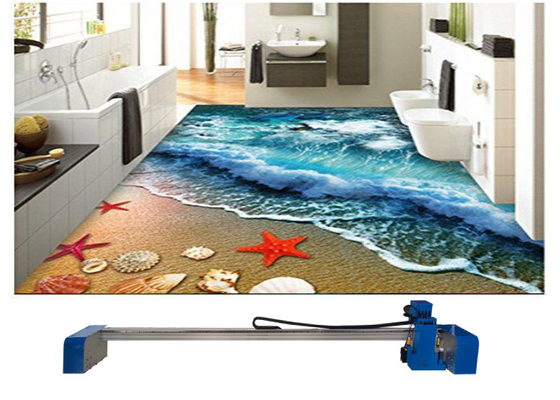
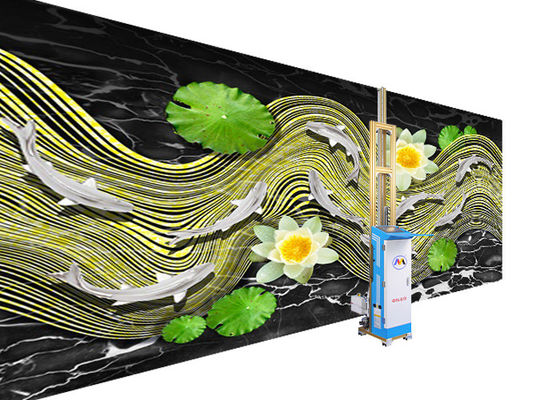
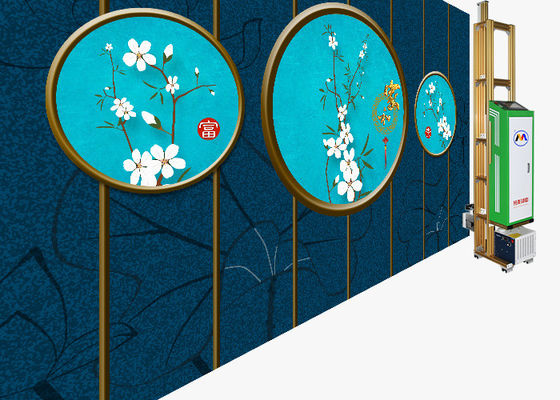
Four views of this unit are held on the platform under reference 14494979 and appear below at their intrinsic aspect ratios. Selecting a view opens it enlarged, and Previous and Next or the arrow keys move through the set.


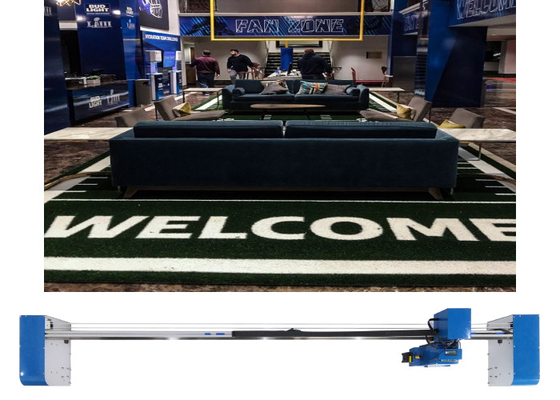
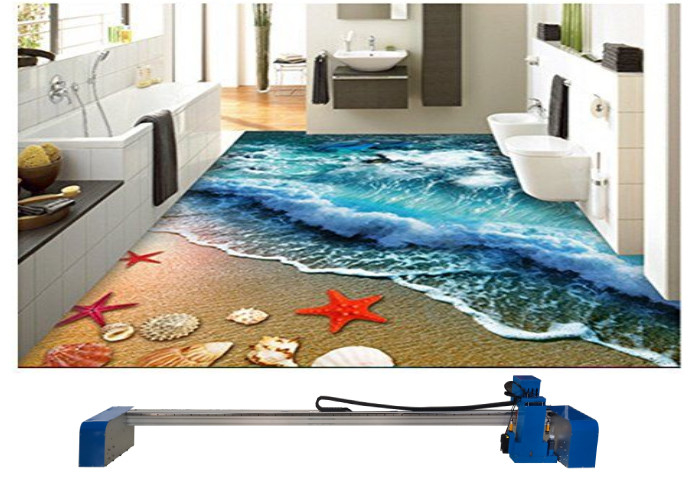
These four views are the whole image set held for reference 14494979, and their file names are exactly as stored in the media library, which is how each frame stays traceable to the listing record.
Independent manufacturer overview
WallNova is described on this platform as a digital wall printing technology manufacturer, with place of origin Beijing, China and a service address in Longhua District, Shenzhen. That is supplier information; it says nothing about the head, the pre-press software or the 3D treatment of the machine in this listing.
| Qualification aspect | Scope statement |
|---|---|
| Machine conformity | Assessed for the shipped model and the regulatory requirements of the destination market. |
| Ink conformity | Assessed separately from the machine, against the ink set supplied with the order. |
| Certificate applicability | Certification depends on the actual product model and target market. |
| Documentation control | Documents are issued against the delivered configuration schedule and the named contracting entity. |
Beyond origin, brand and an ink-scope RoHS record, the listing publishes no technical entry for this unit. The 2880dpi claim and the AI descriptor therefore stand on the product name, and both are best converted into documents before a job is priced against them.
Questions about 2880dpi and pre-press AI
The two descriptors that carry weight here sit on opposite sides of the print: one is inside the head, the other is inside the software that feeds it.
Of the head, as published. It describes how finely the carriage can address positions, not how fine a line will look on a panel or a floor. Any claim about the finished print has to be made against a substrate, because the same head produces visibly different edges on sealed aluminium and on porous screed.
At normal viewing distance, rarely; close up on a smooth substrate, in gradients and in fine type, sometimes. The difference is most reliable in tonal transitions, where extra addressable positions suppress banding, and least reliable in edge sharpness, where the drop's spread sets the limit first.
The listing does not define it beyond the phrase. A pre-press function of this kind works on the image file, adjusting size, separation or dot gain before the raster reaches the head. It cannot change what the ink does on a given surface and it cannot make an incompatible substrate compatible, so it should be judged on the file it produces.
That is the question to ask, and the listing does not answer it. A shop already running a colour-managed workflow will want the processed file to be optional and its settings visible, because an automatic stage that cannot be inspected makes colour approval depend on software nobody has documented.
It is an outcome of layered printing driven by the file, and no dedicated hardware is named for it. The height has to exist in the artwork and the process has to deposit enough ink to build it, which makes the artwork, the layer count and the viewing angle part of the specification rather than features of the machine.
RoHS for ink. Certification depends on the actual product model and target market. Any declaration needed for a destination is therefore a separate document, and a company-level statement is no substitute for one that names the shipped model.
File and print records to keep
Each entry marks a point where a resolution or software claim quietly becomes unverifiable once the job has shipped and the file has moved on.
| Check | What this unit requires | Record to hold |
|---|---|---|
| Mode definition | The axis and pass configuration behind 2880dpi are recorded for every recipe in use. | Mode record per recipe |
| Line width trial | A 1pt rule printed on the production substrate has been measured and filed. | Trial print, measurement note |
| Substrate pair | Edges are compared on the two coatings actually used, not on a workshop sample. | Comparison sheet |
| Height data | The file element carrying 3D height is identified and the layer count is agreed in writing. | Approved artwork file |
| Software settings | Pre-press settings are written down and the processed file is archived with a version. | Version record |
| Ink scope | The ink RoHS record is filed apart from any machine document. | RoHS ink record file |
A resolution claim survives only while the mode, the substrate and the file are all on record. Remove any one of the three and the number turns back into an advertisement.
Direct from manufacturer
Direct from manufacturer
Direct from manufacturer