
Direct from manufacturer
90V 246V Vertical Wall Printer Robot
- Place of Origin
- Beijing, China
- Brand Name
- WallNova
- Certification
- CE for machine, RoHS for ink

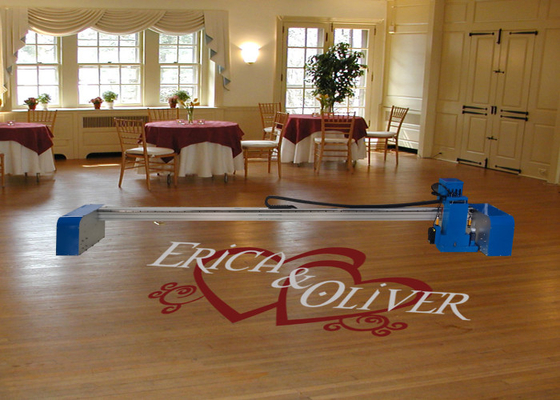
Factory direct product
Net Print Width 2.4m Multifunction Flatbed Printer Ground Adjustable Precision. from Beijing, China.
Product specifications
Consolidated technical specifications
This title carries one measured value and one undefined phrase. Net Print Width 2.4m is a width with a qualifier attached; Ground Adjustable Precision names neither the element being adjusted nor the tolerance it is held to. Multifunction is a claim about scope with no list behind it, and the listing records no model number, so identification depends on WallNova, the platform reference 14494976 and the schedule attached to the quotation.
| Field | Recorded value |
|---|---|
| Product designation | Net Print Width 2.4m Multifunction Flatbed Printer Ground Adjustable Precision |
| Model Number | Not stated in this listing |
| Brand Name | WallNova |
| Place of Origin | Beijing, China |
| Platform reference | 14494976 |
| Category placement | Listed on this platform under multifunction flatbed printer |
| Designation descriptors | Net print width descriptor, flatbed platform descriptor, ground adjustment descriptor, precision descriptor, as stated in the product name |
| Conformity scope | RoHS for ink. A machine-level CE declaration is not stated in this listing. |
Two numbers matter in practice and only one is given. The 2.4m describes the band that can carry ink; the floor area the machine occupies, the rail it rides on and the clearance an operator needs are all larger and all unpublished. A layout drawn from 2.4m alone will be undersized, and the shortfall surfaces on the day of delivery rather than during specification.
Net width, envelope and the undefined adjustment
Net means the part of the width that can actually carry ink. It excludes whatever the carriage occupies at each end, the parking position and the frame that carries the rail. On a machine of this width the difference between net and overall is not a rounding matter; it is the difference between a bay that fits and one that does not.
| Configuration item | Record basis for this unit | Buyer confirmation point |
|---|---|---|
| Model identity | The listing records no model number; the title is a description rather than a designation | File the platform reference 14494976 next to the serial on every document exchanged. |
| Net Print Width 2.4m | A printable band, neither an overall dimension nor a travel length | Obtain overall width, overall length and required clearance as three separate figures. |
| Ground Adjustable Precision | The phrase does not say whether it refers to head height, platform level or step accuracy, and quotes no tolerance | Have the adjustable element named, its range stated and its setting procedure written down. |
| Multifunction | No list of functions accompanies the word, and nothing states a second mode, a second ink set or a second substrate class | Ask for the function list as an itemised schedule instead of accepting a word in the title. |
| Operating surface | Ground mounting is implied by the title, but the floor flatness the machine expects is nowhere stated | Measure the slab before the site layout is approved and keep the record with the order. |
A quotation that repeats 2.4m without a second width figure has answered the easy half of the question. The hard half is what the machine needs around it, and that is where installations go wrong.
Levelness across a two-point-four-metre span
A head holds quality only inside a narrow band of distance from the surface. On a wide machine that band has to be held across the whole width, so any fall in the slab is multiplied by the span: a floor dropping one millimetre per metre drops more than twice that across 2.4m. The machine cannot remove the fall; it can only be adjusted around it.
| Area | What this machine imposes | Verification action |
|---|---|---|
| Slope across the width | Working distance is fixed by the carriage, so a continuous fall across 2.4m turns into a gradient in dot placement that reads as density drift from one side of the job to the other | Take levels at both ends and at the centre of the intended print zone, then plot the result before the layout is fixed. |
| Local flatness | A slab can be level overall and still contain hollows, and a hollow beneath the print zone changes the distance so the defect appears as a soft patch that stays put while the artwork moves | Run a straightedge over the zone in both directions and mark every hollow exceeding the limit agreed with the supplier. |
| What the adjustment moves | If the adjustable element is head height it corrects a constant offset rather than a slope; if it is platform levelling it corrects the slope rather than the hollows. These are different corrections and the title names neither | Establish which element moves, over what range, and whether it can be set at the far edge as well as the near one. |
| Span and rail behaviour | A rail long enough to carry a carriage across 2.4m has its own deflection, and a support that settles under load changes head distance at mid-span rather than at the ends | Check the supports once the machine is in position, then repeat the check after the first week of production. |
| Panel stock against floor work | The 2.4m band matches the long edge of a 1220 by 2440 sheet, which is why the figure exists; printing on stock panels and printing on a floor impose different flatness demands on the same carriage | Decide which substrate the acceptance print will use and make the site measurement match that decision rather than the other way round. |
| Floor loading at the contact points | A wide gantry spreads its mass over a larger footprint but concentrates it where the frame meets the floor, and a suspended deck behaves differently from a slab on grade; no mass or footprint figure is published | Obtain mass and contact positions, then have the slab or deck assessed at the exact intended location. |
Flatness and adhesion methods are drawn from the ASTM and ISO families and chosen for the actual coating and market. No flatness tolerance, mass or overall dimension is published for this machine, so the figures above are arithmetic performed on the 2.4m, not machine data.
Product description and image documentation
Four views of this unit are held on the platform under reference 14494976 and are shown below at their intrinsic aspect ratios. Each frame opens in the enlarged viewer, and the other three are reached with Previous and Next or the arrow keys.



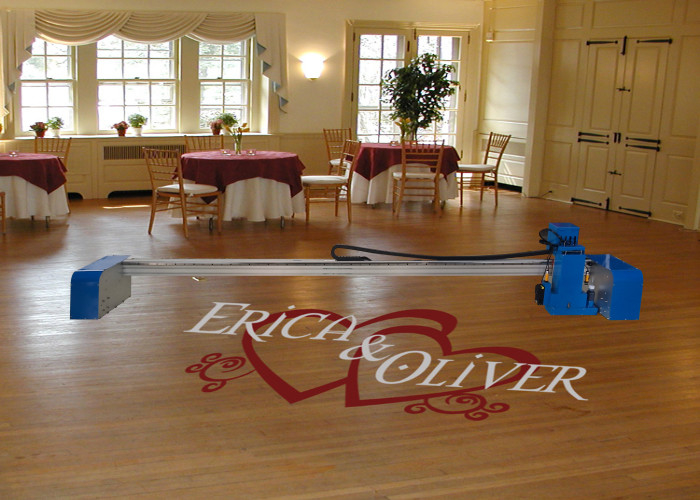
The four frames reproduced here are the complete image set for reference 14494976. Names are kept exactly as stored in the media library, so any frame can be matched against the listing record without interpretation.
Independent manufacturer overview
WallNova appears on this platform as a digital wall printing technology manufacturer, with the product origin given as Beijing, China and a service address published in Longhua District, Shenzhen. Those details identify the supplier entity and say nothing about the width, the flatness requirement or the adjustment range of the machine described here.
| Qualification aspect | Scope statement |
|---|---|
| Machine conformity | Assessed for the shipped model and the regulatory requirements of the destination market. |
| Ink conformity | Assessed separately from the machine, against the ink set supplied with the order. |
| Certificate applicability | Certification depends on the actual product model and target market. |
| Documentation control | Documents are issued against the delivered configuration schedule and the named contracting entity. |
The specification table for this unit holds three entries only: origin, brand and a RoHS for ink record. None of them constrains the width or the precision claim, so both have to be evidenced by documents supplied with the quotation rather than by the listing.
Questions about width, level and panel stock
The questions below are the ones this title invites once the word net is taken seriously rather than read as decoration.
The width of the print. Net print width is the band that can carry ink, and it is always smaller than the overall width because the carriage, the frame and the parking position take up room beyond it. A floor plan needs the overall figures, and those do not appear in the listing.
It means a job up to that width can be printed without joining bands. Anything wider needs a second band and a join, and the quality of that join depends on floor levelness and positioning rather than on resolution. That is the point at which a wide machine starts to behave like a narrow one.
The listing does not say. Head height, platform level and step accuracy are three different adjustments with three different effects, and only the first two relate to the floor at all. Ask which one the phrase refers to, what its range is, and how a setting is reproduced after a service visit.
No tolerance is published, so the number has to come from the supplier. What can be said without one is the shape of the problem: the error a head can absorb is fixed, and the fall across the width is the floor's slope multiplied by the span, so the flatter the slab the wider the range of usable settings.
Because it is the long edge of a 1220 by 2440 sheet, which lets the machine cover a full panel in one band with no trimming. That is a useful match for panel work and an irrelevant one for floor work, which is why the substrate should be named before the width is judged.
The listing records RoHS for ink, which covers the ink and not the machine. Certification depends on the actual product model and target market. The document set for a given destination is therefore confirmed at quotation, and flatness and mass figures are separate engineering documents again.
Site measurements to take before signing
This list is written as measurements rather than as questions, because each entry produces a number that can later be checked against the delivered machine.
| Check | What this unit requires | Record to hold |
|---|---|---|
| Overall dimensions | Overall width, overall length and operating clearance are stated alongside the 2.4m net band. | Dimensioned general arrangement |
| Adjustment definition | The adjustable element is named, with its range and the procedure for setting it. | Setup procedure |
| Floor survey | Levels at both ends and the centre of the print zone are recorded, with hollows marked on the plan. | Site survey sheet |
| Function list | Whatever sits behind Multifunction is itemised rather than summarised. | Itemised function schedule |
| Mass and contact points | Load at each contact point and the footprint are known before a position is agreed. | Foundation or deck assessment |
| Band join plan | For work wider than the band, join positions are chosen in advance and marked on the drawing. | Method statement |
A quotation answering five of these six is workable. One that answers only the width is a description of a machine rather than a specification of a job.
Direct from manufacturer
Direct from manufacturer

Direct from manufacturer