
Direct from manufacturer
90V 246V Vertical Wall Printer Robot
- Place of Origin
- Beijing, China
- Brand Name
- WallNova
- Certification
- CE for machine, RoHS for ink

Factory direct product
Laser Positioning 2.4 M Multifunction Flatbed Printer Digital. from Beijing, China.
Product specifications
Consolidated technical specifications
Laser Positioning and 2.4 M sit in this title beside a word that describes a workflow rather than a component: Digital. The listing holds three specification fields, and the listing records no model number, so the unit is bound by WallNova, the platform reference 14494972 and the configuration schedule supplied with the quotation.
| Field | Recorded value |
|---|---|
| Product designation | Laser Positioning 2.4 M Multifunction Flatbed Printer Digital |
| Model Number | Not stated in this listing |
| Brand Name | WallNova |
| Place of Origin | Beijing, China |
| Platform reference | 14494972 |
| Category placement | Listed on this platform under multifunction flatbed printer |
| Designation descriptors | Positioning-aid descriptor, width descriptor, flatbed platform descriptor, digital workflow descriptor, as stated in the product name |
| Conformity scope | RoHS for ink. A machine-level CE declaration is not stated in this listing. |
2.4 M keeps the spacing used in the title, since normalising it would alter nothing that the listing records, and it still does not say whether the figure is a printed band or a machine envelope. Laser Positioning names an aid without naming what it marks, to what precision, or in which safety class, and Digital says nothing at all about the ink.
What the positioning aid and the width each leave open
A laser on a floor machine serves the operator, not the print head. That distinction decides how much of a job depends on the file and how much depends on where somebody stood when the job started, and it is the reason two machines with the same word in the title can produce different work.
| Configuration item | Record basis for this unit | Buyer confirmation point |
|---|---|---|
| Model and nameplate | The listing records no model number; brand, reference and schedule are the only identifiers available | Carry the serial and the reference on the same schedule page. |
| Laser Positioning | An alignment aid with no stated target: origin point, boundary line or fiducial mark are all consistent with the wording | Ask what the beam marks and whether it is a point, a line or a cross. |
| 2.4 M | A width in the title, with the intended quantity unstated and the original spacing kept as published | Confirm on a drawing whether the figure is the print band or the machine envelope. |
| Digital | A workflow descriptor; the ink family, the primer and any top coat are separate matters with separate suppliers | Get the ink family and the coating schedule named in the quotation. |
| Conformity scope | RoHS for ink; the listing carries no machine-level statement and no laser documentation | Request the machine and laser documents the destination requires, as distinct items. |
The two words that carry the most weight here, positioning and precision, are the two the listing quantifies least. That is not a reason to reject the machine; it is a reason to put the question in writing before the order is released.
Datum, repeatability and a beam at floor level
A laser that lands on the right spot once and a laser that lands on the same spot every morning are two different products, and only one of them keeps a multi-index floor aligned. On a working site there is a second consideration the listing leaves entirely open: the beam sits at the height of people, not only of panels.
| Area | What this machine imposes | Verification action |
|---|---|---|
| What the beam constrains | A single line fixes one axis and leaves rotation free, a cross fixes two axes, and a point fixes position while constraining nothing else. Which of the three is fitted decides whether a rotated panel can be detected at all. | Ask for the projected pattern and the number of axes it constrains. |
| Accuracy against repeatability | Accuracy is how close the first hit is to the intended datum; repeatability is how close the tenth hit is to the first. A machine can be accurate and drift, or repeatable and offset, and only the second of those two conditions is corrected by editing the artwork. | Ask for both figures separately, then re-datum the same file three times and measure. |
| Laser class and the walking public | The classification of the beam is not stated anywhere in the listing. A line projected at floor level is at nobody's eye height and at everybody's ankle height, and the control measures differ completely between a weak alignment beam and anything stronger. | Obtain the class, the wavelength and the intended controls before the site is occupied. |
| Visibility in working light | A bright floor in a bright room lowers the contrast of a projected line, and an operator who cannot see the line will quietly substitute judgement for the reference, which is worse than having no aid at all. | Test the line at the ambient light of the busiest shift, not at commissioning in the evening. |
| 2.4 M band and artwork datum | The laser has to point at something that exists in the file, or the alignment stays purely visual. Where the datum sits in the artwork is a decision that has to be taken before the first index, not after the first seam appears. | Mark the datum in the print file and note its coordinates on the job sheet. |
| Digital workflow, manual alignment | A digital machine removes the plate but not the set-up. The file arrives in seconds and the panel is still positioned by hand, so throughput is decided by set-up time rather than by data rate. | Time a complete set-up cycle and use that number in the job costing. |
Colour and adhesion assessment routes come from the ASTM and ISO families and are selected for the coating and the market at order stage. Nothing in the listing states a laser class, a positioning tolerance, a repeatability figure or a test result, and none of those is asserted by the wording above.
Product description and image documentation
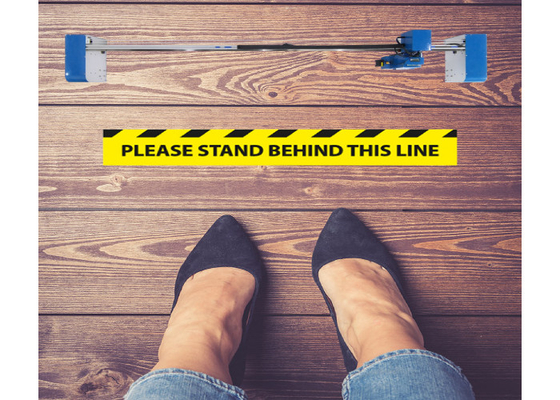
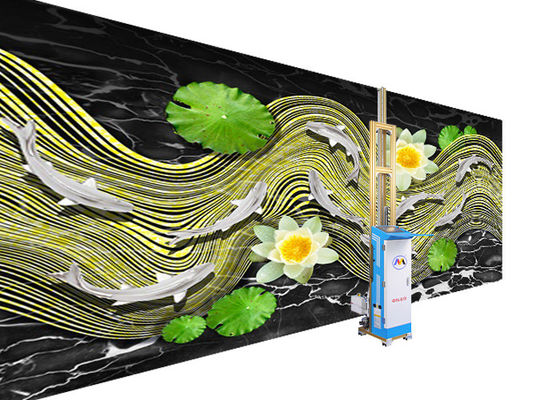
Four views of this unit sit on the platform under reference 14494972 and appear below at their intrinsic aspect ratios. Opening any frame enlarges it, and Previous and Next or the arrow keys move through the remaining three.
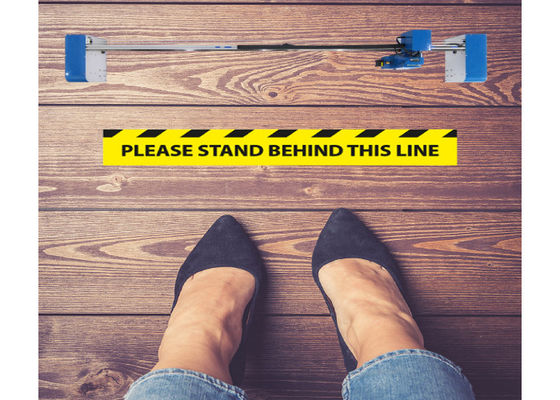

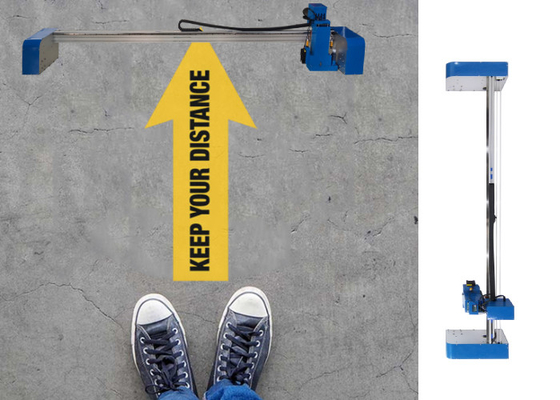
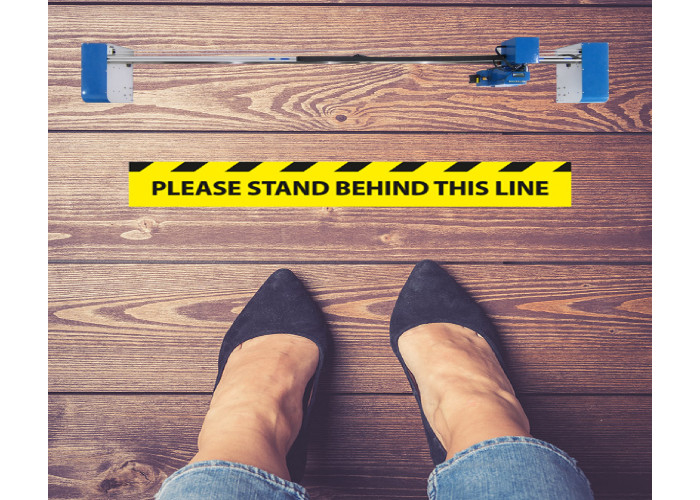
These four views are the entire image set held for reference 14494972, and nothing further is stored against it. File names are unchanged from the media library, so the gallery can be traced back to the listing record rather than being taken on trust.
Independent manufacturer overview
WallNova is presented on this platform as a digital wall printing technology manufacturer, with the origin of the product recorded as Beijing, China. That identification describes the supplier; it does not describe the laser module, the datum arrangement or the printed band of the machine offered here.
| Qualification aspect | Scope statement |
|---|---|
| Machine conformity | Assessed for the shipped model and the regulatory requirements of the destination market. |
| Ink conformity | Assessed separately from the machine, against the ink set supplied with the order. |
| Certificate applicability | Certification depends on the actual product model and target market. |
| Documentation control | Documents are issued against the delivered configuration schedule and the named contracting entity. |
Laser class and positioning tolerance are safety and performance questions rather than marketing ones. Both can be put in writing through info@verticalwallprinter.com or on 0755-2839 5787, and the reply belongs with the order documents rather than in an operator's notebook.
Questions a projected line does not answer
These questions follow from the positioning term in the title, and each one is answered by a different document.
The listing does not say whether it projects a point, an edge line or a cross. The distinction matters because a single line constrains one axis and leaves rotation unconstrained, so a panel placed against it can still be skewed by a degree that only shows up at the far end of a floor. Ask for the pattern before assuming the alignment is complete.
No class, wavelength or control measure appears in the listing. The question belongs in the first written exchange, because the answer decides whether the beam can be used in an occupied building with no further controls or whether it needs an exclusion zone and a nominated operator for the duration of the job.
No, and the two are often conflated in sales conversation. Accuracy describes the first hit against the intended datum; repeatability describes hit ten against hit one. A machine that repeats well but sits offset is corrected once in the file, while a machine that is accurate but drifts has to be re-datumed at every index, which changes the labour estimate rather than the artwork.
Undefined in the listing. The figure could describe the band covered in one pass, the travel of the carriage, or the width of the machine including its frame, and each reading gives a different answer on access, index count and floor planning. A drawing with the dimension marked removes the ambiguity in a single page.
No. Digital describes how the image reaches the substrate rather than what is deposited on it, so the ink family, the primer and any top coat remain separate decisions that the quotation has to name. Digital also says nothing about conformity: the listing carries RoHS for ink only. Certification depends on the actual product model and target market. The machine documents for a given destination are therefore requested on their own.
The projected pattern and the axes it constrains, the class and the site controls agreed for it, an accuracy figure and a repeatability figure recorded as two separate numbers, the datum marked in the print file, and a timed set-up cycle taken on the buyer's own floor rather than in a showroom.
Verification lines for an alignment-aided machine
Every line below replaces an unstated value with a document, and each one is cheaper to obtain before the order than to reconstruct after delivery.
| Check | What this unit requires | Record to hold |
|---|---|---|
| Identification | Brand, reference 14494972, serial and ink family appear on one schedule. | Signed order specification |
| Beam pattern | The projected pattern and the axes it constrains are described in writing. | Technical annex |
| Safety data | Laser class, wavelength and the controls required on site are documented. | Laser safety sheet |
| Two tolerances | Accuracy and repeatability are quoted as separate figures rather than as one headline number. | Quotation annex |
| Datum record | The artwork datum and its coordinates are noted on the job sheet. | Job file |
| Set-up timing | A full alignment and set-up cycle has been timed once on the buyer's site. | Commissioning log |
A reference line is useful, and it is not a substitute for two numbers. Where the listing stays silent, the silence should be resolved on paper before it is resolved on a floor with the machine already unloaded.
Direct from manufacturer
Direct from manufacturer

Direct from manufacturer