
Direct from manufacturer
90V 246V Vertical Wall Printer Robot
- Place of Origin
- Beijing, China
- Brand Name
- WallNova
- Certification
- CE for machine, RoHS for ink

Factory direct product
Auto Clean Multifunction Flatbed Printer 2880 Dpi For Parking Spot. from Beijing, China.
Product specifications
Consolidated technical specifications
This title carries one figure and three descriptors: Auto Clean, Multifunction, 2880 Dpi and Parking Spot. The listing itself holds three specification fields, and the listing records no model number, so identification runs through WallNova, the platform reference 14494967 and the schedule that accompanies the quotation. Nothing below adds a fourth field to that set.
| Field | Recorded value |
|---|---|
| Product designation | Auto Clean Multifunction Flatbed Printer 2880 Dpi For Parking Spot |
| Model Number | Not stated in this listing |
| Brand Name | WallNova |
| Place of Origin | Beijing, China |
| Platform reference | 14494967 |
| Category placement | Listed on this platform under multifunction flatbed printer |
| Designation descriptors | Cleaning-function descriptor, flatbed platform descriptor, resolution descriptor, parking-spot application descriptor, as stated in the product name |
| Conformity scope | RoHS for ink. A machine-level CE declaration is not stated in this listing. |
2880 Dpi is reproduced with the capitalisation used in the title, and it arrives without an axis, a print mode or a drop volume, so it cannot be converted into throughput or into a claim about visible detail. Auto Clean arrives without an interval, without a trigger and without any statement of what is cleaned, and those three gaps are the subject of the first table rather than a footnote.
Reading the three title terms against three recorded fields
Auto Clean, 2880 Dpi and Parking Spot read like a specification, and each is in fact a descriptor that leaves the decisive number unstated. The table separates what the listing fixes from what a buyer has to see written down before the machine is built.
| Configuration item | Record basis for this unit | Buyer confirmation point |
|---|---|---|
| Model and nameplate | The listing records no model number, so there is no plate value for a quotation to be checked against | Attach the serial, the platform reference and the configuration schedule to one page of the order. |
| Auto Clean | A cleaning function named in the title, with no interval, trigger, cycle duration or target surface stated anywhere | Have the quotation name the interval, say whether it is clock-based or print-count-based, and state what the cycle touches. |
| 2880 Dpi | Resolution in the title only, capitalisation left as published, with no axis and no production mode attached | Ask for the figure to be restated against one axis at one quoted speed. |
| Parking Spot | A place of use rather than a substrate; no floor material, sealer or traffic load appears in the listing | Write the slab build-up and the vehicle mix into the site notes before any sample is approved. |
| Conformity scope | RoHS for ink, with no machine-level declaration published on this page | Request the machine documents that the destination market requires, counted as a separate item. |
A descriptor in a title is a marketing decision that the buyer inherits as a risk. Turning each of these three into a written answer is the whole of the technical due diligence for this machine, and none of it needs a laboratory.
Cleaning cycles, ink path and tyre load on a marked bay
Automatic cleaning sits between the operator and the nozzle plate, which is precisely where information about the head can be lost as easily as it can be protected. On a parking bay there is a second question the title never raises, and that one decides how long the print survives rather than how clean it looks on the first day.
| Area | What this machine imposes | Verification action |
|---|---|---|
| Cleaning trigger and interval | A cycle that runs on a fixed schedule treats a healthy plate and an ailing one with the same motion, so a slow drift in nozzle performance is erased before anybody records it. A cycle that runs on a detected condition behaves the other way and exposes the trend. | Compare a nozzle check taken before and after every automatic cycle for the first week, and keep both prints. |
| Ink consumed by cleaning | Every cycle spends ink that never reaches the floor, and the volume per cycle is not published, so a job priced on printed area alone can understate consumption by a margin nobody sees until the ink account is reviewed. | Obtain the ink volume per cycle as a number and carry it into the cost per square metre. |
| 2880 Dpi against viewing geometry | Dot pitch describes where drops land, not what an eye resolves from a standing position beside a car, and a bay is read at an oblique angle rather than straight on. | Approve the sample from the height and the angle a driver will really meet it at. |
| Tyre contact at the film edge | A steered tyre applies shear where the ink film meets the slab, and the film is the thinnest element in the whole build-up, so lifting begins at the boundary long before the middle of the image shows damage. | Run a loaded, steered pass across a coated sample edge before the coating schedule is fixed. |
| Bay dimensions and machine access | Marking inside an occupied bay is limited by how the machine reaches the far corners, and that footprint question is settled long before the print file is prepared. | Draw the footprint over a plan of one bay and walk the route with the building operator. |
| Top coat responsibility | The protective layer over the ink is a separate product from the ink itself, and the listing describes none, so its presence or absence changes the wear answer completely. | Name who supplies and applies the top coat, and at what interval it is renewed. |
Abrasion and adhesion test methods are usually drawn from the ASTM and ISO families and are chosen for the slab and the destination market when the order is placed. No test result, wear class or cycle count is published for this machine, and none is implied by the wording above.
Product description and image documentation
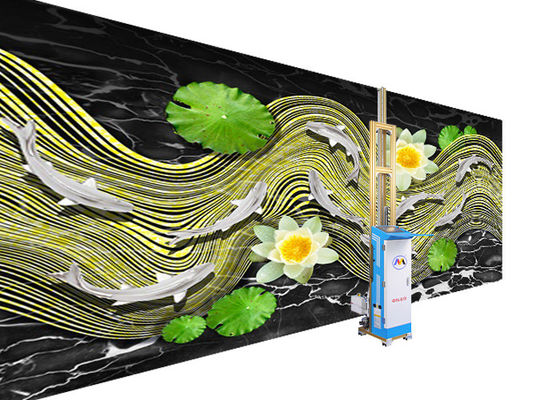
Four views of this unit are held on the platform under reference 14494967 and are shown below at their intrinsic aspect ratios. Selecting a frame opens the enlarged viewer, and the remaining three are reached with Previous and Next or with the arrow keys.
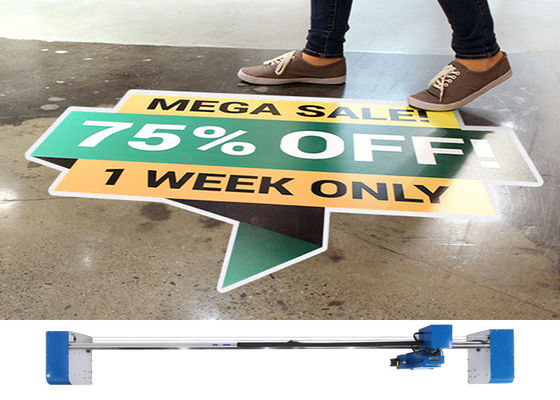

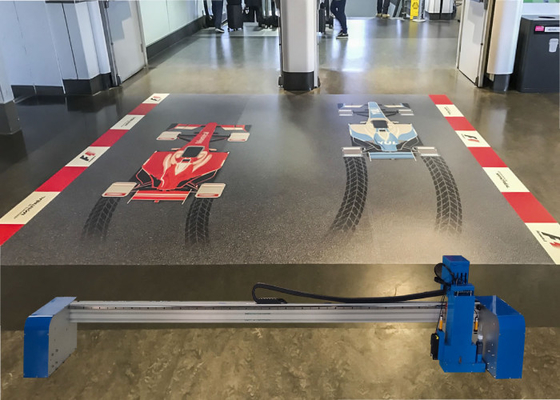
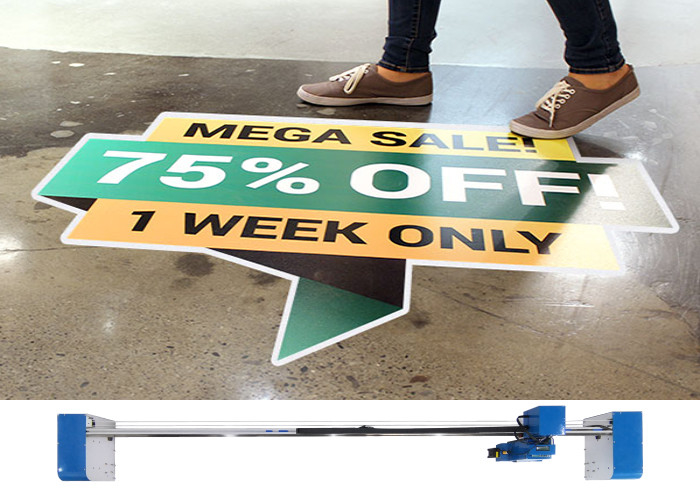
The four views above are the complete set stored for reference 14494967, and no further frames sit under that reference. File names are unchanged from the media library, which is what allows any frame here to be matched against the listing record it came from.
Independent manufacturer overview
WallNova is presented on this platform as a digital wall printing technology manufacturer, with the product origin recorded as Beijing, China. Those details describe the supplier entity; they say nothing about the cleaning routine, the head count or the floor-handling arrangement of the machine in this listing.
| Qualification aspect | Scope statement |
|---|---|
| Machine conformity | Assessed for the shipped model and the regulatory requirements of the destination market. |
| Ink conformity | Assessed separately from the machine, against the ink set supplied with the order. |
| Certificate applicability | Certification depends on the actual product model and target market. |
| Documentation control | Documents are issued against the delivered configuration schedule and the named contracting entity. |
The cleaning interval and the measurement condition behind 2880 Dpi can both be requested in writing before any commitment, through info@verticalwallprinter.com or on 0755-2839 5787. A reply that names the interval and the axis is worth more than any photograph of the cabinet.
What the parking-bay wording leaves a buyer to ask
Each question below grows out of a term in this particular title rather than out of flatbed printing in general, and each one has a document behind it.
Both are possible and the listing does not say which is intended. A cycle that runs on a timer clears a partial blockage before the operator sees it, which protects the print and conceals the trend; a cycle that runs on a detected condition reports the trend and intervenes less often. Ask whether the trigger is the clock or a sensor, and keep nozzle checks either side of the cycle so the difference stays visible on paper.
No interval and no per-cycle volume appear in the listing. On low-volume bay work the cleaning budget can approach the printed budget, which is why the figure belongs in the cost model rather than in the maintenance folder. Request both numbers at quotation stage, then check them again after the first month of real jobs.
It governs edge sharpness and the smallest legible lettering, and both are genuine advantages for bay numbers and stencil-style graphics. It does not govern whether the ink survives a tyre. Treat the resolution as a detail specification and treat the coating schedule as the durability specification, because they are answered by different suppliers.
That is a scheduling question before it is a technical one. Curing, dust and traffic exclusion all need a window, and the machine has to stand somewhere while the film sets. Agree closed hours with the building operator and write them into the access agreement, since the print is judged by drivers who arrive after the window has closed.
By brand, by the platform reference and by the configuration schedule. Because the listing records no model number, a quotation that names only the product title does not bind a specific unit, so the schedule should carry the serial, the reference and the ink set together on one page.
The ink, and nothing else in this listing. Certification depends on the actual product model and target market. A machine-level declaration for the destination is therefore a separate document to request, rather than something to infer from the presence of an ink record.
Closure points before the order and before the first bay
Each line below answers a gap in the listing. Where a line cannot be filled from a document, it stays open for the quotation rather than becoming an assumption.
| Check | What this unit requires | Record to hold |
|---|---|---|
| Identification | Brand, reference 14494967, serial and ink set sit together on a single schedule. | Signed order specification |
| Cleaning definition | Interval, trigger type and per-cycle ink volume are written down as numbers. | Quotation annex |
| Detail sample | A printed panel has been approved from driver height and at the angle of approach. | Approved sample and photograph |
| Wear trial | A coated sample has taken a loaded, steered pass without edge lift. | Wear trial record |
| Access plan | Footprint, closed hours and dust control are agreed with the building operator. | Access agreement |
| Document scope | Machine documents for the destination are filed apart from the ink RoHS record. | Order file |
A title with three descriptors produces six records. Filling them before dispatch costs a few emails; discovering the gaps with a machine already on the slab costs a schedule.
Direct from manufacturer
Direct from manufacturer

Direct from manufacturer