
Direct from manufacturer
90V 246V Vertical Wall Printer Robot
- Place of Origin
- Beijing, China
- Brand Name
- WallNova
- Certification
- CE for machine, RoHS for ink

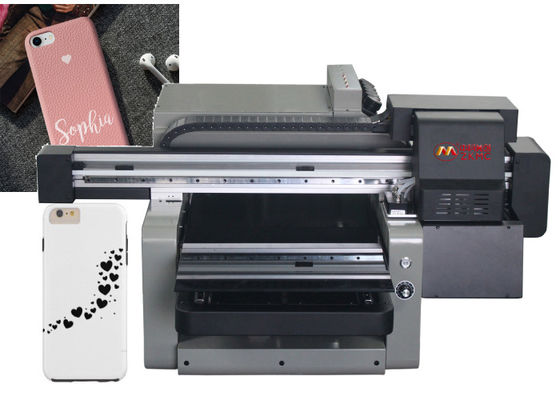
Factory direct product
2 Heads CMYKW 5 Colors 4060 A2 + Uv Flatbed Printer For Wood. from Beijing, China.
Product specifications
Consolidated technical specifications
The title carries a format code, a head count, a colour set and a substrate, and only one of those four is self-defining. CMYKW names five channels without ambiguity; 4060 A2+ mixes a numeric size code with an ISO A2 reference, 2 Heads states a quantity without an arrangement, and wood names a family of materials rather than a material. Given that the listing records no model number, the three published specification values, origin, brand and RoHS for ink, are the entire factual base.
| Field | Recorded value |
|---|---|
| Product designation | 2 Heads CMYKW 5 Colors 4060 A2 + Uv Flatbed Printer For Wood |
| Model Number | Not stated in this listing |
| Brand Name | WallNova |
| Place of Origin | Beijing, China |
| Platform reference | 14278175 |
| Category placement | Listed on this platform under multifunction flatbed printer |
| Designation descriptors | Head-count descriptor, colour-configuration descriptor, bed-size descriptor, UV flatbed platform descriptor, wood application descriptor, as stated in the product name |
| Conformity scope | RoHS for ink. A machine-level CE declaration is not stated in this listing. |
A2 is defined by ISO 216 as a sheet of 420 mm by 594 mm, but the listing never says that the printable area of this machine equals A2, and the 4060 prefix is not explained. A2+ is not an ISO size at all, so the plus sign is a trade shorthand whose meaning has to come from the supplier rather than from the standard.
Format code, head count and colour set in one title
A format code is the easiest thing in a product title to misread, because it looks exact. Here it is doing at least two jobs at once, and the head count that follows it is a capacity statement with no arrangement attached.
| Configuration item | Record basis for this unit | Buyer confirmation point |
|---|---|---|
| Model and nameplate | The listing records no model number; the format code is not a substitute for one | Have the schedule print the serial beside reference 14278175, with no reliance on the code. |
| Format code | 4060 A2+ combines an unexplained numeric code with an ISO A2 reference and a plus sign outside that standard | Ask for printable area in millimetres and for a statement of what 4060 denotes, bed or series. |
| Head count | Two heads, with no statement of whether they duplicate a colour set or divide it between them | Ask for the head allocation drawing before any throughput figure is discussed. |
| Colour set | CMYKW across five channels, which cannot be spread evenly over two heads without sharing | Obtain the channel-to-head map and the order in which the colours fire. |
| Substrate | Wood named without species, thickness, moisture content or finish | Put species, thickness and moisture content into the sample request in writing. |
Two of these five lines could be resolved by a single drawing. That is the practical reason to ask early: the format, the head allocation and the substrate decision all appear on the same page of a well-made quotation.
UV ink on a substrate that drinks it
Most UV flatbed work happens on sealed or non-absorbent media, where the ink rests on the surface and curing is a surface event. Wood is the opposite case. It takes ink inward, and how far it takes it depends on species, on grain and on how much water the board is still holding.
| Area | What this machine imposes | Verification action |
|---|---|---|
| Dot gain along the grain | Ink wicks faster along the fibres than across them, so the same file printed on two panels cut in different directions arrives at two slightly different colours. | Print one test file on a panel cut along the grain and one cut across it, and keep both as references. |
| Moisture content and movement | Wood continues to exchange moisture with the room after printing, and a board that was flat on the bed can cup or bow once it has acclimatised somewhere else. | Agree the moisture content the workshop will hold before printing and measure the panel on the day. |
| The sealer decision | Sealing keeps the ink on the surface and moves the adhesion question onto the sealer; leaving the wood bare increases absorption and dulls saturation. The two paths produce different products from the same machine. | Decide sealed or bare before the sample is printed, and record the choice with the approved sample. |
| White over a dark species | Walnut, stained oak and thermally treated timber swallow a white base, so the W channel's usefulness depends on how much it lays down rather than on the fact that it exists. | Print a white step wedge on the darkest species in the intended range and select the step that holds. |
| What the second head actually adds | A second head either doubles the width covered per pass or splits the colour workload, and the two arrangements differ in speed, in alignment risk and in maintenance. Neither is a doubling of output. | Confirm which arrangement is being sold, then time a square metre instead of halving a single-head figure. |
| Lamp heat on thin stock | UV curing puts heat into the surface, and a thin veneer or a laminated board responds to that heat differently from a solid section, sometimes by curling after the lamp has passed. | Run the thinnest stock in the intended range through a full cure cycle before the material is ordered in quantity. |
Adhesion and colour assessment on wood are usually drawn from ASTM and ISO method families and agreed for the species, the finish and the destination market. Naming a family is not a claim that this machine holds a certificate; the listing carries RoHS for ink and no test data.
Product description and image documentation
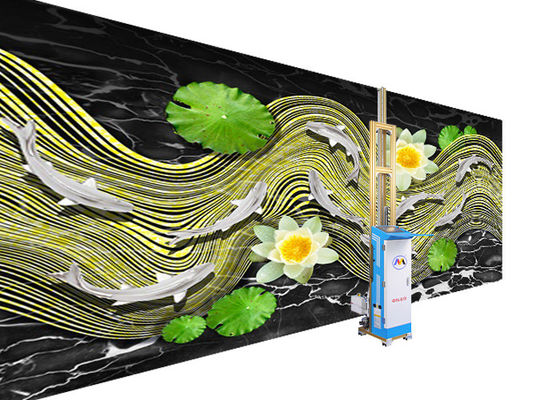
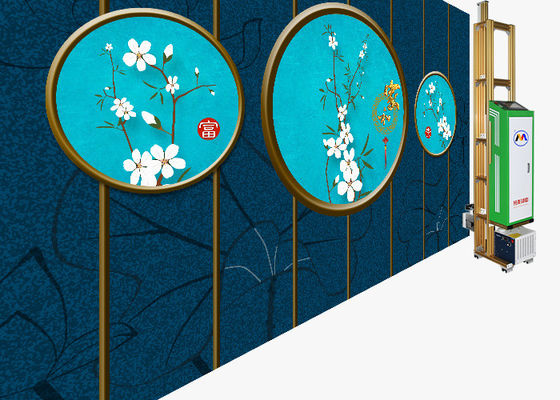
Four views of this unit are held on the platform under reference 14278175 and appear below at their intrinsic aspect ratios. Click a frame to inspect it enlarged, then use Previous and Next or the arrow keys to walk the four images.
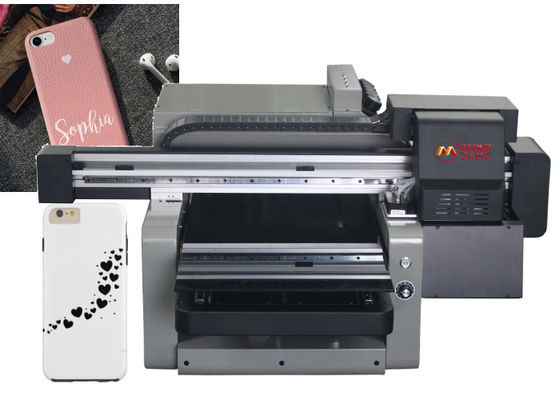

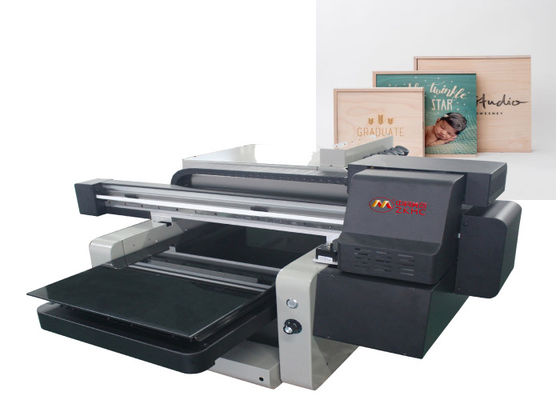
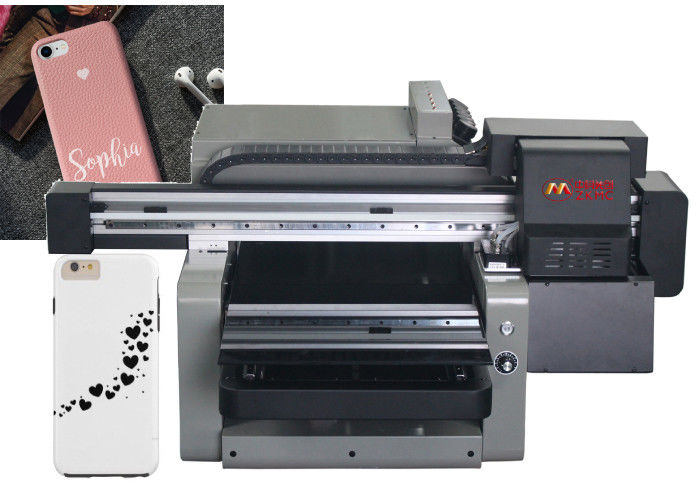
The four views shown are the full image set for reference 14278175. Nothing was renamed on import, so each file still carries the name it had in the media library and can be matched to the listing.
Independent manufacturer overview
WallNova appears on this platform as a digital wall printing technology manufacturer, with the product origin recorded as Beijing, China. The published identification below describes the supplier entity and the storefront behind it; it does not describe the bed, the head allocation or the ink sequence of this machine.
| Qualification aspect | Scope statement |
|---|---|
| Machine conformity | Assessed for the shipped model and the regulatory requirements of the destination market. |
| Ink conformity | Assessed separately from the machine, against the ink set supplied with the order. |
| Certificate applicability | Certification depends on the actual product model and target market. |
| Documentation control | Documents are issued against the delivered configuration schedule and the named contracting entity. |
The ink record in this listing is a RoHS statement for the ink, not a machine declaration. Ask for the document that names the shipped unit and the market it is going to, and keep it apart from the ink paperwork.
Wood-specific questions about this configuration
These questions come from printing on timber with a five-channel UV flatbed, not from flatbed printing in general.
The listing does not define it. A2 is an ISO 216 sheet size of 420 mm by 594 mm, but the plus sign is outside that standard and 4060 is not an ISO designation, so the code cannot be resolved from published standards. Ask for the printable area in millimetres and for the meaning of the numeric part, bed dimension or series name.
Not in any direct way. Two heads can be arranged to cover double the width in a pass, or to divide the five colours between them, and only the first arrangement affects speed in the obvious direction. The second changes colour sequencing and alignment instead. Ask which arrangement is quoted, then verify with a timed square metre.
It will wet the surface, but bare wood keeps drawing ink inward, so colour depth and edge sharpness both fall away and the film that remains is thin. Sealed wood holds a better film but moves the adhesion question onto the sealer. Both routes are workable; the failure comes from choosing one by accident.
The ones the business actually sells. Species differ in density, in resin content and in how strongly they move with moisture, and a sample printed on a neutral test board says little about a resinous softwood or an oily tropical hardwood. Test the extremes of the range, not the middle.
Only where the design needs an opaque base or a bright white element. On pale species white may be unnecessary, while on dark or stained timber it is the channel that decides whether the other four read correctly. The decision belongs to the artwork and to the species, not to the machine.
The ink RoHS record the listing mentions, plus machine documentation for the destination market. Certification depends on the actual product model and target market. The applicable set is confirmed when the order is placed rather than taken from the listing.
Sign-off items for a wood-printing unit
Timber introduces variables that a flatbed buyer coming from plastics or metal will not expect. These are the ones that surface in the first weeks of production.
| Check | What this unit requires | Record to hold |
|---|---|---|
| Format confirmation | Printable area is given in millimetres and the 4060 part of the code is explained. | Quotation annex |
| Head arrangement | The allocation of five colours across two heads is drawn and agreed. | Head layout drawing |
| Species and finish | Every species to be run is listed with thickness, moisture content and sealer choice. | Material schedule |
| Grain trial | Panels cut along and across the grain have both been printed and retained. | Reference panels |
| Throughput check | A square metre has been timed in the production mode with the chosen arrangement. | Timing record |
| Cure and flatness | The thinnest stock has passed a full cure cycle without curl beyond the agreed limit. | Commissioning note |
A wood job fails slowly: the print looks right on the bed and wrong a week later in the warehouse. The checks above are aimed at that gap.
Direct from manufacturer
Direct from manufacturer
Direct from manufacturer