Home/CMYKW T Shirt Garment Fiber Cloth A3 Flatbed Printer Machine
Factory direct product
CMYKW T Shirt Garment Fiber Cloth A3 Flatbed Printer Machine
CMYKW T Shirt Garment Fiber Cloth A3 Flatbed Printer Machine. from Beijing, China.
Get the latest price
Product specifications
Technical details
Place of Origin
Beijing, China
Brand Name
WallNova
Product Overview
The CMYKW T Shirt Garment Fiber Cloth A3 Flatbed Printer Machine is a versatile multifunction flatbed printer built for high-quality UV digital printing on flat and rigid substrates. Key features include CMYKW 5-color ink configuration (includes white), CMYK color printing, garment and textile printing.
Key Features
CMYKW 5-color ink configuration (includes white)
CMYK color printing
garment and textile printing
Applications
This flatbed printer is designed for printing on floor tiles, ground decoration, garage floors, glass panels, metal sheets, wood boards, ceramic tiles, and other rigid flat materials. It is widely used in advertising, interior decoration, packaging, and industrial product marking.
Technical Advantages
As a WallNova product, the CMYKW T Shirt Garment Fiber Cloth A3 Flatbed Printer Machine benefits from rigorous quality control, CE-certified machine construction, and RoHS-compliant ink systems. The printer features a robust frame design, precision guide rails, and an intuitive control interface that simplifies operation for both experienced technicians and new operators.
The ink system is engineered for consistent color output and long-term reliability. Depending on the configuration, the printer supports either water-based eco-friendly inks (low odor, suitable for indoor use) or UV-curable inks (fast curing, suitable for a wider range of materials including non-porous surfaces).
OEM / ODM Customization
WallNova offers comprehensive OEM and ODM customization for the CMYKW T Shirt Garment Fiber Cloth A3 Flatbed Printer Machine. Customers can specify custom machine colors, printing widths, printhead configurations, ink systems, and software interfaces to match specific project requirements. Minimum order quantities and lead times vary by customization level — contact our team for a detailed quotation.
Consolidated technical specifications
CMYKW T Shirt Garment Fiber Cloth A3 Flatbed Printer Machine
This designation is narrow on purpose. It names a five-colour ink set, an A3 bed, and three related textile surfaces: a shirt, a garment, and fibre cloth. There is no 3D claim and no artificial-intelligence claim attached, which leaves the machine to be judged on the one thing a textile buyer actually cares about, which is how white behaves on dark cloth and whether the result survives a wash.
Field
Recorded value
Product designation
CMYKW T Shirt Garment Fiber Cloth A3 Flatbed Printer Machine
Model Number
Not stated in this listing
Brand Name
WallNova
Place of Origin
Beijing, China
Platform reference
14278146
Category placement
Listed on this platform under multifunction flatbed printer
No certification field in the specifications record. Certification depends on the actual product model and target market.
Two records on this page disagree, and the disagreement is worth stating plainly rather than smoothing over. The descriptive copy attached to the listing speaks of CE-certified machine construction and RoHS-compliant ink, while the structured specifications record origin and brand and nothing else. Neither statement is a certificate. Certification depends on the actual product model and target market, so the only acceptable resolution is a document that names the shipped unit.
Reading the three surface terms as one requirement
A shirt is a finished article with seams, a collar and a shape, and it sits on the bed as a three-dimensional object rather than as a sheet. A garment can be a heavier article still, and fibre cloth is the raw material before either exists.
The three terms matter because they set three different hold-down problems. A cut panel can be adhered flat, a seamed shirt cannot be flattened without stretching it, and loose cloth has to be tensioned before it is printed or the image distorts when it relaxes.
None of the three terms says anything about fibre composition, and fibre composition is the variable that decides whether a print is colour-stable, whether it cures without glazing, and whether it survives the first wash.
The white circuit and the bed
Four commitments in a four-word ink specification
CMYKW looks like a colour list and behaves like a statement about the shop's product range. The moment white is present, the machine can address dark goods, and dark goods are where the volume is in garment decoration. The other three terms in the title constrain that range in ways the colour list does not.
Configuration item
Record basis for this unit
Buyer confirmation point
White channel
Present as the fifth colour; no pigment load, opacity per pass or white-head arrangement published
Ask whether white has a dedicated head or shares a channel, since that decides purge cost on short runs.
A3 bed class
A 297 by 420 millimetre sheet class; reachable area is smaller once the hold-down frame is in place
Get the printable window as a number before designing artwork that assumes A3.
T shirt and garment
Two descriptors for goods that are held on the bed rather than fed through it, with no maximum thickness published
Measure the thickest article in the range and confirm the head can clear it with the hold-down in place.
Fibre cloth
An open material descriptor; cotton, blends and synthetics behave differently under the same ink and the same cure
Have the seller print the exact blend in the order book, not a cotton swatch chosen for the demonstration.
Pretreatment
Not mentioned anywhere in the listing, although colour yield on dark textile normally depends on it
Establish whether a pretreatment unit is supplied, recommended or excluded, and who specifies the application rate.
Fixation and washing
Not described; UV-cured ink on textile is judged by rub and wash performance rather than by a published standard
Agree the wash test method and the acceptance threshold before the machine ships.
A five-colour machine on an A3 bed is a short-run tool by construction. The economics come from changeover, not from speed: the value of white is that it removes a screen or a transfer from the workflow, and the cost of white is that it has to be kept moving through the head on every job, however short.
Ink on fibre, judged after the wash
Six variables that decide whether the print is still there in a month
Textile printing is evaluated twice: once when the piece leaves the machine, and once when it comes back from the laundry. The two evaluations reward different things, and a setting that improves the first can quietly damage the second.
Area
What this machine imposes
Verification action
Fibre absorbency
Cotton wicks the ink into the yarn, so a drop that stays on the surface of a coated panel sinks and spreads here, and the visible dot grows while the ink film thins
Print a fine line and a solid patch on the actual cloth and measure both, since absorbency affects them in opposite directions.
White film weight
Opacity over a dark ground is a function of how much white stays on the surface, and too thin a film lets the ground shift the hue of everything printed above it
Compare one pass and two passes of white over black cloth under the same lighting, then read a colour patch on top of each.
Wet-on-wet interval
Colour laid onto white that has not yet settled mixes at the interface instead of sitting on it, and the damage shows as a dulled highlight rather than as a visible fault
Print a gradient over white at two different intervals and inspect the light end of the ramp.
Cure energy against blend
Energy sufficient to anchor ink on cotton can be excessive for a synthetic blend, where the same dose produces glazing and a stiffer hand
Run the blend through the full cure setting and check hand feel and surface sheen beside the cotton control.
Tension and registration
Cloth held under tension is a coordinate system that changes when released, so a print that is square on the bed can dry out of square
Measure a printed rectangle after release and after washing rather than on the bed.
Rub fastness at the edge
The boundary between printed and unprinted cloth is where mechanical action concentrates, and it is the first area to show wear on a collar or a sleeve
Rub the edge with dry and damp white cloth and record the result with the ink batch.
The conversion questions a garment shop asks first
Whether finished goods go straight onto the bed or whether the shop prints cut panels and sews afterwards. The second route removes the thickness and seam problem entirely and is often the cheaper way to use a bed this size.
Whether the pretreatment is applied by hand, by spray or by a dedicated unit. Hand application is the usual entry point and the usual source of inconsistent colour between operators.
Whether the shop has a wash test it already trusts. If it does, that test becomes the acceptance criterion; if it does not, the first customer complaint will invent one.
Colour difference and fastness are assessed using methods from the ISO and ASTM families selected for the fibre and the destination market. This listing publishes no film weight, cure energy or drop volume, so the entries above describe what has to be measured on a sample rather than what the machine is guaranteed to deliver.
Product description and image documentation
Complete product image set
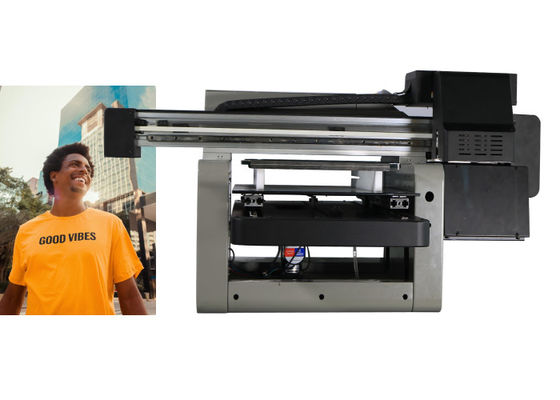
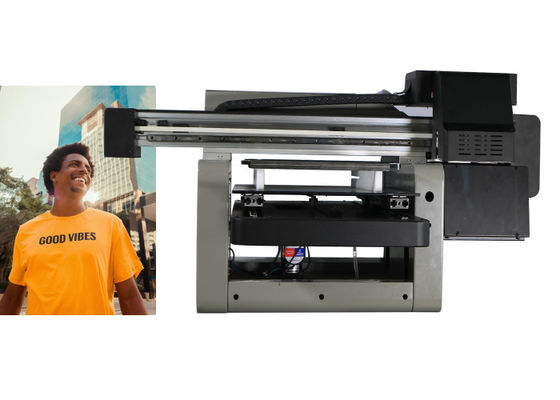
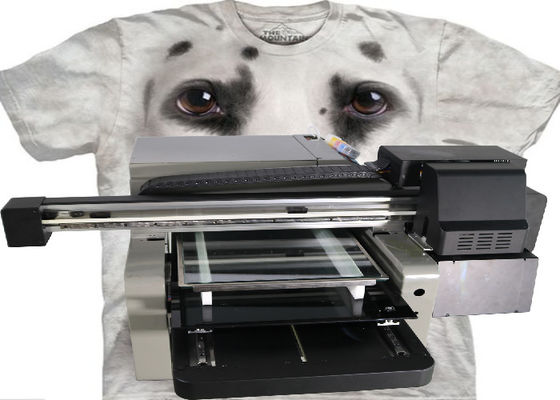
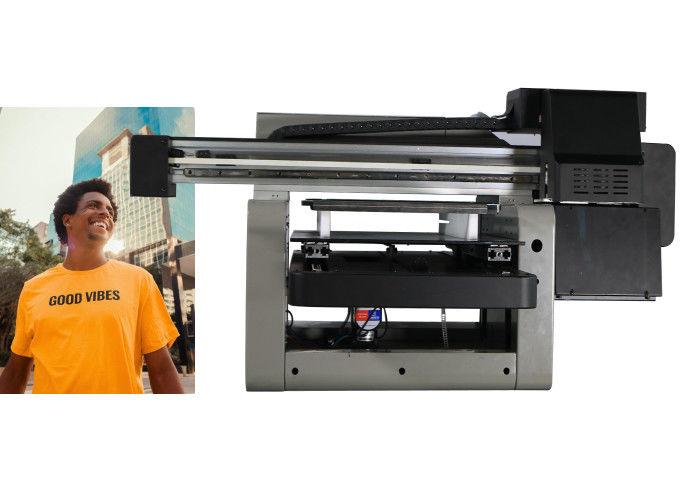
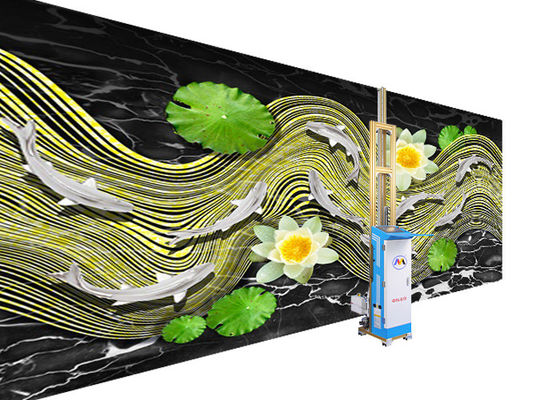
Four views are held on the platform under reference 14278146 and appear below at their intrinsic aspect ratios. Selecting a view opens it enlarged, and Previous and Next or the arrow keys move through the set. The frames show the machine and its bed; the ink behaviour on cloth has to be established from a printed sample.
View 01 / 560 x 400View 02 / 560 x 400View 03 / 560 x 400View 04 / 700 x 500
These four frames are the full image set held for reference 14278146 and the file names are exactly as stored in the media library. Nothing in the set is a printed garment, which is the reason the sample request in the sections above carries more weight than any picture of the machine.
WallNova is presented on this platform as a digital wall printing technology manufacturer, with place of origin Beijing and a service address in Longhua District, Shenzhen. The company's stated field is wall printing, and this listing is a textile machine; the overlap is in the ink delivery and curing platform rather than in the application, which is why the garment-specific questions on this page deserve their own answers.
Brand
WallNova
Positioning
Digital Wall Printing Technology
Product origin
Beijing, China
Contact address
Longhua District, Shenzhen, China
Service hours
8:30-17:30 (China time)
Business scope
Direct-to-wall printing systems
Conformity scope and qualification
Qualification aspect
Scope statement
Machine conformity
Assessed for the shipped model and the regulatory requirements of the destination market.
Ink conformity
Assessed separately from the machine, against the ink set supplied with the order.
Certificate applicability
Certification depends on the actual product model and target market.
Documentation control
Documents are issued against the delivered configuration schedule and the named contracting entity.
Because the descriptive copy on this listing mentions CE construction and RoHS ink while the structured record carries neither, the enquiry should ask for the two documents by name rather than accept the sentence. A declaration that names the model and the ink batch is a different object from a paragraph that mentions certification, and only the first is usable in a customs or tender file.
Questions from garment decorators
What a five-colour A3 textile bed can and cannot settle
The machine answers a specific question: can a shop put a durable full-colour image on dark cloth without a screen or a transfer. Everything else in the enquiry follows from how completely that question has to be answered.
Is white ink essential, or can the same work be done without it?
On light cloth the white channel is optional and often better omitted, because a white layer under colour changes the hand feel for no visible gain. On dark cloth it is the difference between printing and staining. Since the same bed will be used for both, the practical question is whether white can be bypassed per job without a long purge cycle.
How much of the work is the machine and how much is preparation?
In garment decoration a large share of the outcome is decided before the head moves: whether the cloth is tensioned evenly, whether the pretreatment is uniform, and whether the fibre has been cleaned of the finishes applied during manufacture. A machine can only print on the surface it is given, and a patchy pretreatment produces a patchy print on any equipment.
Does the listing tell me the maximum garment thickness?
No. The title names shirts, garments and cloth but publishes no clearance figure, and clearance is what decides whether a hooded sweatshirt can go on the bed or only its front panel can. Measure the thickest article in the range and confirm head clearance with the hold-down in place before committing to finished-goods work.
What should a wash test actually prove?
That the image keeps its colour and stays attached through the cycle the customer will use, not through the gentlest cycle available. The useful test is the one written into the acceptance document: fibre, wash programme, temperature, number of cycles, and the threshold for colour change and for edge lifting. Without those five items, a passing sample proves only that the sample passed.
Why does the listing mention wall printing at all?
Because the brand is described as a wall printing manufacturer and the platform carries wall machines under the same name. That is context about the supplier rather than a claim about this unit. The ink delivery and curing platform is shared across the range; the media handling is not, and media handling is what a garment shop lives with daily.
Which certificate should be requested first?
The one that names the model being shipped, and then the ink record separately if the destination market requires it. Certification depends on the actual product model and target market, so a generic company statement answers a different question from the one a buyer is asking.
Records to hold before the first paid job
Six files that make a textile print defensible
Textile work is judged by the customer after wearing and washing, which is long after the operator has forgotten the settings. These six records exist so that a good result can be repeated and a bad one can be traced.
Check
What this unit requires
Record to hold
Fibre inventory
Every cloth in the order book is listed with its composition, because the same settings do not transfer between cotton and blend.
Fibre list with supplier references
White recipe
Pass count and opacity target recorded per cloth colour, not per machine.
Recipe sheet per ground colour
Pretreatment rate
Application method and quantity per square metre agreed and written down.
Application note
Cure setting
The setting used for each blend is recorded beside the hand-feel result.
Cure log
Wash test
Method, cycle count and threshold agreed before shipment of the machine.
Signed acceptance test
Conformity documents
Model-specific machine document and separate ink record, both naming the shipped configuration.
Document set per destination
The first four entries describe the shop's own process rather than the seller's product, and they are the four that determine whether the machine's output is consistent from operator to operator. A buyer who keeps them will find that the machine's specification matters less than expected, and a buyer who does not will blame the machine for a process problem.