
Direct from manufacturer
90V 246V Vertical Wall Printer Robot
- Place of Origin
- Beijing, China
- Brand Name
- WallNova
- Certification
- CE for machine, RoHS for ink

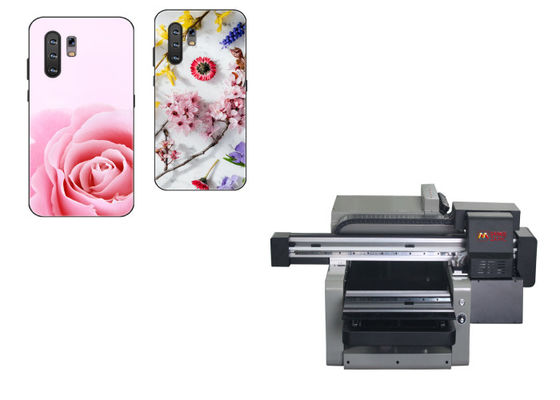
Factory direct product
Direct Pictures Printing 390-400nm Multifunction Flatbed Printer. from Beijing, China.
Product specifications
Consolidated technical specifications
With three published fields and no model number recorded, the only technical statement in this entry is its title. Two of its elements carry real information: the curing band 390-400nm and the flatbed platform class. The third, Direct Pictures Printing, describes an intention rather than a process.
| Field | Recorded value |
|---|---|
| Product designation | Direct Pictures Printing 390-400nm Multifunction Flatbed Printer |
| Model Number | Not stated in this listing |
| Brand Name | WallNova |
| Place of Origin | Beijing, China |
| Platform reference | 14106704 |
| Category placement | Listed on this platform under multifunction flatbed printer |
| Designation descriptors | Process descriptor, curing-band descriptor, flatbed platform descriptor, as stated in the product name |
| Conformity scope | RoHS for ink. A machine-level CE declaration is not stated in this listing. |
A wavelength band characterises lamp output, not the cure achieved on a substrate. Whether 390-400nm suits the ink depends on the photoinitiator in that ink, and the listing does not identify the ink.
One number and three unstated partners
390-400nm sits in the UVA range that most UV-curable ink systems are formulated around. The band matters because a photoinitiator absorbs in a particular region; if the lamp emits outside it, the ink receives light without starting the reaction. The title gives the band and withholds the ink, the dose and the lamp type.
| Configuration item | Record basis for this unit | Buyer confirmation point |
|---|---|---|
| Model and nameplate | No nameplate value is available, because the listing records no model number | Quote the platform reference 14106704 alongside the serial whenever a spare part is ordered. |
| Curing band | 390-400nm stated as a lamp characteristic | Ask for measured irradiance at the working distance, not only the nominal band. |
| Ink match | The photoinitiator system is not identified | Obtain the ink data sheet and confirm its absorption range against the band. |
| Dose | No irradiance, exposure time or dose figure is given | Ask what dose the supplier uses to qualify cure at production speed. |
| Process description | Direct Pictures Printing stated without defining the image path | Ask whether the image is printed in one pass or built from layers, and at what resolution. |
The band is the one hard number here, and it is a number about the lamp. Everything that decides whether a print cures belongs to the other half of the pair: the ink, the dose and the working distance.
Cure dose, lamp drift and the 390-400nm window
A narrow band is a precision claim and a liability at the same time. It means the output is concentrated where the ink wants it, and it also means that as the lamp ages and its spectrum moves, the output can drift out of that window before it dims enough to be noticed.
| Area | What this machine imposes | Verification action |
|---|---|---|
| Photoinitiator absorption | Cure begins only where the ink's photoinitiator absorbs, so a lamp band and an ink system form a matched pair rather than two independent specifications. | Print a cure ladder at several speeds and record which speed still passes the adhesion test. |
| Lamp ageing | Output falls and the spectrum shifts with hours of use, and the shift is harder to see than the fall in brightness. | Keep an hour-meter reading and a reference cure test at fixed intervals. |
| Dose against speed | Cure is the product of irradiance and exposure time, so doubling speed halves the dose at the same lamp setting. | Tie the qualified production speed to a measured dose rather than to a setting number. |
| Working distance | Irradiance falls sharply as the lamp moves away from the surface, so a taller part receives less light than a flat sheet at the same setting. | Measure the distance for the tallest part in the range and re-qualify cure at that distance. |
| Heat on thin media | UV curing deposits heat as well as light, and thin or heat-sensitive stock can distort between passes, which surfaces later as misregistration. | Check the flatness of the finished part, not only the image, when qualifying a new material. |
| Eye exposure | 390-400nm sits at the edge of visible violet, so stray light is an eye hazard that is easy to underestimate precisely because part of it can be seen. | Confirm the shielding supplied with the machine and keep the enclosure interlock functional. |
Adhesion and cure evaluation are commonly drawn from ASTM and ISO test-method families, agreed for the substrate and destination market at quotation. Quoting a family name says nothing about conformity for a given market.
Product description and image documentation
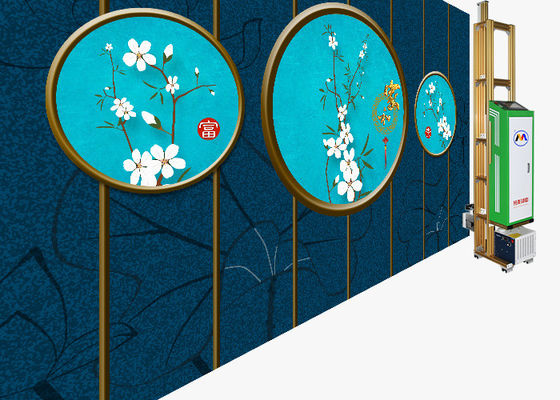
Four views are held on the platform under reference 14106704 and shown below at their intrinsic aspect ratios. Choose any view to open the enlarged viewer; Previous and Next or the arrow keys move through the set.
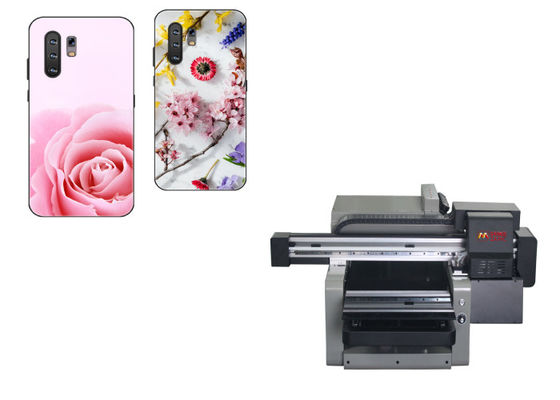


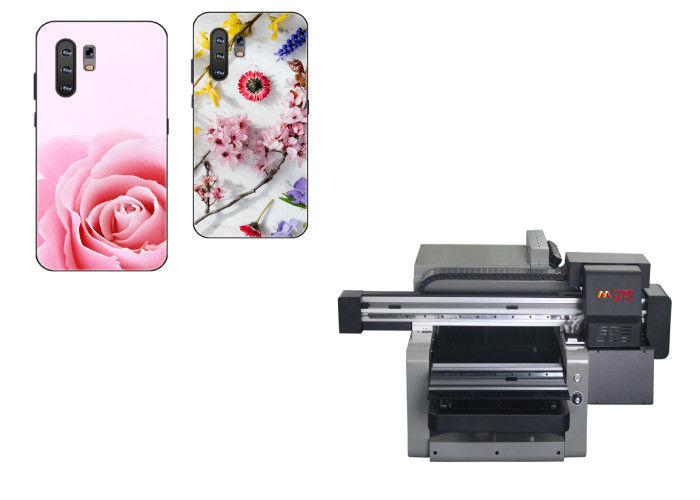
Four views form the complete gallery for reference 14106704. Their stored file names are unchanged from the media library, so the gallery can be verified against the listing record.
Independent manufacturer overview
The supplier behind this listing is presented on the platform as a digital wall printing technology manufacturer, with Beijing, China as the recorded place of origin. The details below describe that entity rather than the configuration of the unit itself.
| Qualification aspect | Scope statement |
|---|---|
| Machine conformity | Assessed for the shipped model and the regulatory requirements of the destination market. |
| Ink conformity | Assessed separately from the machine, against the ink set supplied with the order. |
| Certificate applicability | Certification depends on the actual product model and target market. |
| Documentation control | Documents are issued against the delivered configuration schedule and the named contracting entity. |
A company profile and a product conformity document answer different questions. Ask which document names this machine and the market it will be sold into.
Questions about a wavelength-led specification
These questions arise from the one measurable value in the title. They are the ones a buyer should be able to answer before committing to production.
That the lamp emits in a narrow UVA band. It does not tell you the irradiance at the working distance, the dose delivered at production speed, or whether the ink supplied is formulated for that band. Those three figures decide whether a print cures.
Not safely. A UV ink is built around a photoinitiator that absorbs in a specific range, and a lamp band outside that range produces light without a reliable cure. Changing ink supplier, or even batch, is a change to the curing recipe and needs a fresh cure test.
Because the spectrum shifts as the lamp ages. A narrow window leaves less margin, so output can drift away from the ink's absorption range before the lamp looks dim. A fixed-interval cure test catches that earlier than a visual check does.
The phrase states an intention to print an image directly onto the workpiece. It names no process, no resolution and no file path, so the useful questions are about print mode, layer structure and the resolution actually used at production speed.
By a cure ladder on the real substrate: the same image printed at several speeds, each tested for adhesion and surface tack after the same interval. The fastest speed that passes becomes the qualified setting for that ink and material.
The listing records RoHS for the ink only. Certification depends on the actual product model and target market. Any machine declaration for a specific destination is therefore a subject for the quotation.
Verification around the curing band
The lines below convert a lamp characteristic into a production setting. Each one produces a document rather than an opinion.
| Check | What this unit requires | Record to hold |
|---|---|---|
| Irradiance | Output is stated at the working distance, not only as a band. | Lamp measurement report |
| Ink match | The ink's absorption range is confirmed against 390-400nm in writing. | Ink data sheet |
| Qualified speed | The fastest speed that passes a cure test is recorded as the production setting. | Cure ladder record |
| Lamp hours | A baseline hour reading and a reference cure test are held from commissioning. | Service log |
| Shielding | The enclosure and its interlock are demonstrated during commissioning. | Commissioning note |
| Identification | Platform reference 14106704 and the serial travel together on every document. | Order and service file |
A cure test performed once at commissioning is a baseline, not a guarantee. Its value comes from being repeated at fixed intervals with the same ink, the same substrate and the same method.
Direct from manufacturer
Direct from manufacturer
Direct from manufacturer