
Direct from manufacturer
90V 246V Vertical Wall Printer Robot
- Place of Origin
- Beijing, China
- Brand Name
- WallNova
- Certification
- CE for machine, RoHS for ink

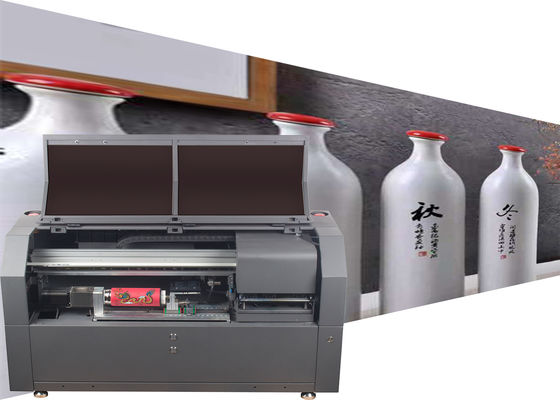
Factory direct product
90s Cylindrical Inkjet Printer On Ceramic Glass Plastic Mug Bottle Barcode Metal. from Beijing, China.
Product specifications
Consolidated technical specifications
This is a machine sold on the breadth of its substrate list rather than on a numeric specification. The record itself holds three rows; the name adds six materials and two applications. The gap between those two levels is the subject of this page, because a substrate list is a statement of intent until each material has been qualified with its own ink and pre-treatment.
| Field | Recorded value |
|---|---|
| Product designation | 90s Cylindrical Inkjet Printer On Ceramic Glass Plastic Mug Bottle Barcode Metal |
| Brand Name | WallNova |
| Place of Origin | Beijing, China |
| Product family | Cylinder printing machine for bottle label work |
| Platform reference | 14100823 |
| Designation descriptors | 90s designation token, cylindrical inkjet engine, substrate list covering ceramic, glass, plastic, mug, bottle and metal, barcode application |
| Record completeness | No resolution, printhead count, ink chemistry, diameter envelope or cycle time is published in the specification rows |
| Conformity scope | Machine conformity and ink conformity are assessed separately. Certification depends on the actual product model and target market. |
The leading 90s token has two plausible readings and the record does not choose between them: it can be a cycle time of ninety seconds per piece, or a series designation with no time meaning at all. Read as a cycle time it implies a ceiling of forty pieces per hour at continuous feed. Read as a series label it implies nothing about throughput. Ask which reading applies before writing a capacity plan.
Reference model series and configuration boundaries
A list of six materials in a product name reads like a capability. In practice each material is a separate adhesion problem, and a machine is only qualified for the materials someone has actually tested it on. The table below separates what the name claims from what the buyer still has to close out per substrate.
| Configuration item | Record basis for this unit | Buyer confirmation point |
|---|---|---|
| Ceramic and glaze | Named as a substrate with no ink or pre-treatment stated | Confirm the ink system for fired glaze and whether a primer is required, then test after a dishwasher cycle rather than straight off the machine. |
| Glass | Named as a substrate, glass type not specified | Establish whether the glass is soda-lime or borosilicate and whether a silane primer is part of the process, since adhesion differs sharply between them. |
| Plastic | Named generically, no polymer identified | Identify the polymer and its surface energy; polypropylene and polyethylene normally need flame or plasma treatment before any ink will hold. |
| Mug and bottle geometry | Both named, taper and handle not addressed | Supply a sample with the real taper and handle so the fixture and the head path can be checked against the actual shape. |
| Metal | Named as a substrate, coating state not stated | Confirm whether the metal is bare, anodised or powder-coated, because the ink and the primer change with each of the three. |
| Barcode duty | Barcode named as an application, no grading or data format stated | State the symbology, the X-dimension and the grading level required, and whether serialisation is needed at the machine or supplied as a file. |
A supplier who can demonstrate two of these six substrates has demonstrated two of six. The remaining four are unqualified until a sample is printed and tested, and the order should say so rather than inheriting the breadth of the product name.
Engineering practice across mixed substrates and coded marks
Decorative printing tolerates a little variation in dot placement; a scannable code does not, because bar width is the information. When the same cylinder engine is asked to do both, the settings that make one acceptable can make the other fail, and the difference is almost always angular speed rather than ink.
| Area | What this machine imposes | Verification action |
|---|---|---|
| Code orientation on a curve | A code laid along the circumference is stretched or squeezed by any error in angular speed, while the same code laid along the axis is affected only by head height and carriage speed. | Print both orientations on the same bottle and grade them, then fix one orientation in the job template. |
| Bar width growth | Ink spread narrows the spaces and widens the bars, so a code printed at the minimum X-dimension can drift out of tolerance as the ink lot or the substrate changes. | Set the X-dimension one step above the minimum the scanner allows and re-verify after every ink lot change. |
| Substrate changeover | Six materials mean six curing and adhesion behaviours on one fixture, and a setting carried over from ceramic to polypropylene will look correct and wipe off. | Keep a separate parameter set per substrate and load it by name, never by memory. |
| Taper and handle interference | A tapered mug or a handled bottle changes the surface distance mid-pass, and a handle inside the arc can strike the carriage on a badly set job. | Dry-run every new shape with the head raised and mark the interference zone on a setup sheet. |
| Glaze and coating variation | Two ceramic lots from different kilns can differ in surface energy, so an adhesion result obtained on one lot does not transfer to the next. | Retain a reference piece per lot and re-test adhesion whenever the ceramic supply changes. |
| Small-part handling | Short cylinders give the fixture very little to grip, and a part that shifts by a fraction of a degree destroys a code that would survive the same shift as decoration. | Use a positive stop against the base and reject parts whose runout exceeds the agreed figure. |
Barcode verification is normally referenced to grading practice within ISO and symbol-quality standards, and adhesion to ASTM test-method families. Which grade and which method apply here is settled with the buyer for the actual substrate and market; naming those families is not a statement that this model carries a certificate.
Product description and image documentation
Four photographs are held for platform reference 14100823, covering the machine body, the cylindrical fixture and a printed sample. They are shown below at the proportions they were stored with, and selecting any one of them opens the enlarged viewer with Previous and Next controls or arrow-key navigation.
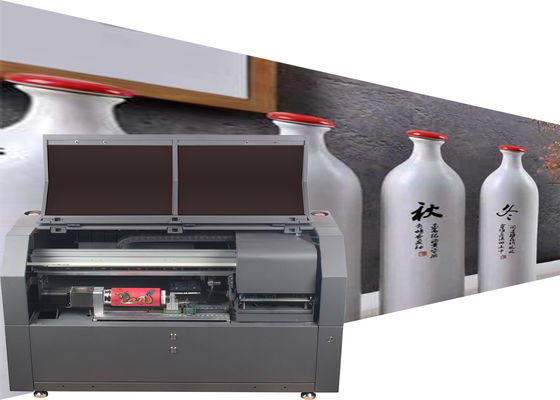

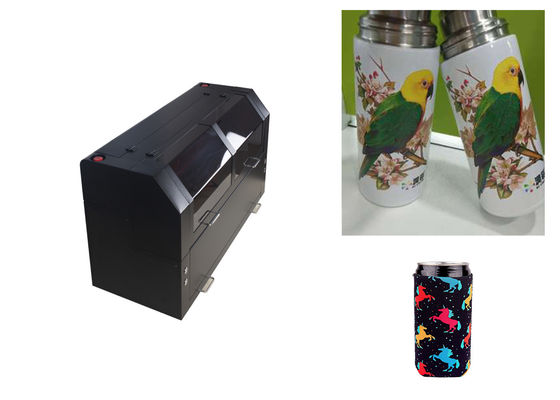
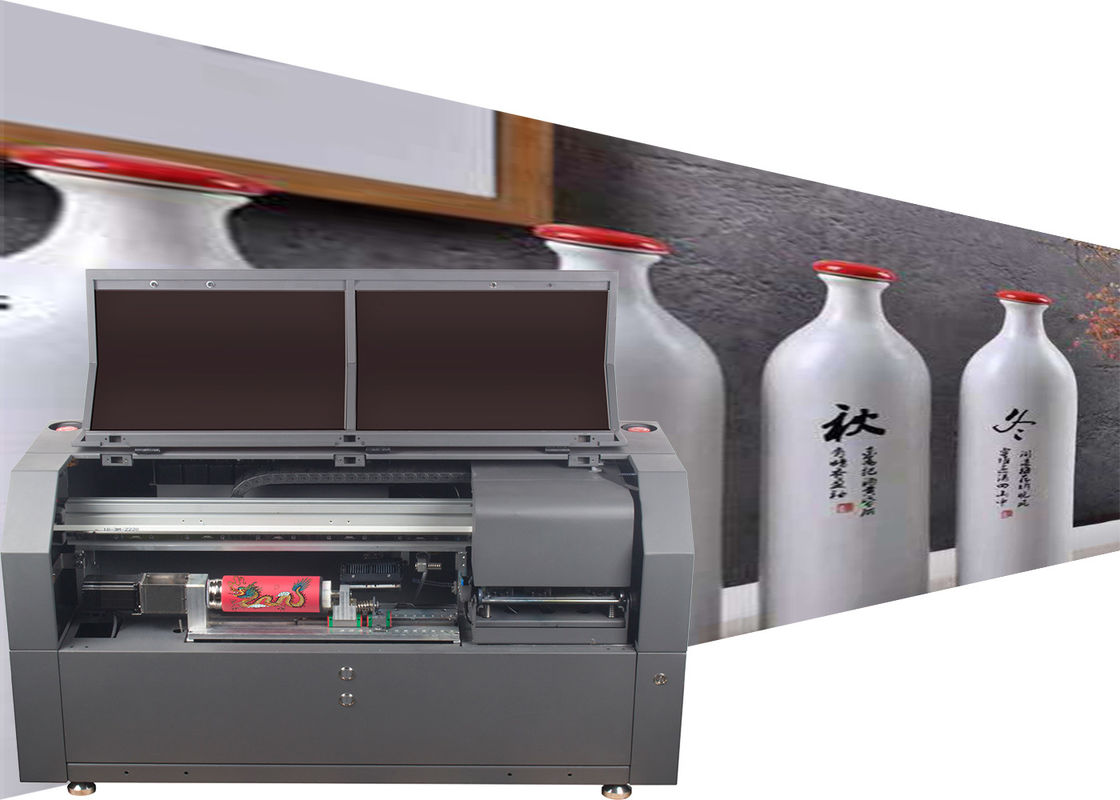
The four files above are everything archived under reference 14100823. Their library file names are untouched, so any of them can be matched back to the listing and to the printed sample it shows.
Independent manufacturer overview
The storefront publishes the company fields reproduced below, and they are shown here as published. A six-substrate machine is a demanding thing to support, so the practical question for a buyer is not only who makes it but who answers when one substrate behaves differently from the demonstration sample.
| Qualification aspect | Scope statement |
|---|---|
| Ink conformity | The listing carries a RoHS statement for the ink, which is an ink-scope record and travels with the ink set ordered. |
| Machine conformity | Assessed for the shipped model and the regulatory requirements of the destination market; no machine-level certificate is published on this listing. |
| Certificate applicability | Certification depends on the actual product model and target market. |
| Documentation control | Documents are issued against the delivered configuration schedule and the named contracting entity. |
Where a product will be used on food-contact-adjacent or child-use articles, the ink declaration matters as much as the machine declaration. Ask which ink grade is supplied for those applications instead of assuming the standard set covers them.
Questions this configuration actually raises
These are the questions that arise from mixing decorative and coded printing on one cylindrical machine. General commercial questions are answered in the quotation and are deliberately left out of this section.
Possibly, but the record does not confirm it. If it is a cycle time it caps output at forty pieces per hour before load, unload and rejects, which puts the machine in the small-batch or personalisation bracket. If it is a series designation there is no throughput claim at all. Either way it should be settled in writing, because a capacity plan built on a misreading is expensive to unwind.
Not with equal results. The four surfaces differ in how they accept ink: glaze and glass are non-absorbing, plastics vary in surface energy and often need treatment, and metal depends on whether it is bare or coated. A supplier may offer a universal primer, but it still has to be demonstrated per material, and the demonstration should use the buyer's own parts.
It can print a barcode, but suitability depends on grading rather than on the presence of the feature. The questions that decide it are the symbology, the X-dimension, the orientation relative to the rotation, and how much bar-width growth the ink produces on that substrate. Get a graded sample in the intended orientation before committing the line to it.
The surface distance to the head changes along the cone and a handle intrudes into the printable arc. Both are mechanically solvable with the right fixture and a checked head path, but neither is automatic, and a machine set up for straight bottles will not print a tapered mug correctly out of the box.
Less than the full turn in normal practice, because the fixture grips the part over a sector. For coded printing the blocked arc matters twice: it limits artwork area, and it determines where a code can be placed relative to the seam. Measure it on the production part rather than assuming a full wrap.
Not necessarily a different machine, but almost certainly a different parameter set, a different primer and possibly a different ink. The machine is the constant; the qualification is per material. Budget for the qualification work, including reject rates during the first production run on each new substrate.
One printed and graded code per substrate, an adhesion test on each material after the appropriate post-treatment such as a wash or a dishwashing cycle, the blocked arc measured on each part shape, and the parameter file stored per substrate. Anything accepted verbally at commissioning will be renegotiated at the first quality complaint.
Verification before order and before dispatch
Use this list when the buying decision rests on the substrate breadth claimed in the name. It sits alongside the normal import checks and does not substitute for them.
| Check | What this unit requires | Record to hold |
|---|---|---|
| 90s reading | The supplier states in writing whether the token is a cycle time or a series label. | Written clarification in the quotation |
| Substrate matrix | Each of the six named materials is marked as qualified, requires primer, or untested. | Substrate qualification matrix |
| Code grading | A graded sample exists in the chosen orientation and at the chosen X-dimension. | Grading report and retained sample |
| Parameter sets | One stored parameter file per substrate, loaded by name at changeover. | Exported parameter files |
| Fixture envelope | The diameter and length range is stated together with the taper and handle limits. | Fixture drawing |
| Ink scope document | The RoHS statement names the ink set actually ordered, not a general ink family. | Ink conformity document |
| Identification set | Platform reference 14100823, the product name and the configuration schedule describe one machine. | Signed order specification |
The most expensive outcome on a machine like this is a line qualified on the wrong substrate and discovered at the first production audit. The matrix above is cheap to build at quotation stage and very costly to build afterwards.
Direct from manufacturer
Direct from manufacturer

Direct from manufacturer