
Direct from manufacturer
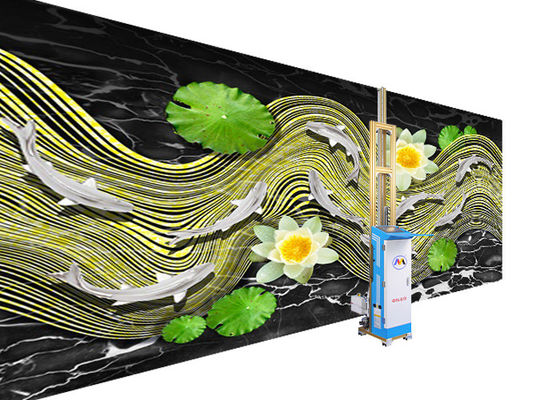
90V 246V Vertical Wall Printer Robot
- Place of Origin
- Beijing, China
- Brand Name
- WallNova
- Certification
- CE for machine, RoHS for ink


Factory direct product
Special Uv Ink 220V Multifunction Flatbed Printer Bidirectional Direct To Phone Case Picture Painting. from Beijing, China.
Product specifications
Consolidated technical specifications
Three specification fields are published for this entry and the listing records no model number, so the title is the only technical statement. Its four descriptors, Special Uv Ink, 220V, Bidirectional and Direct To Phone Case, each name a property without giving the value a buyer would need in order to compare machines.
| Field | Recorded value |
|---|---|
| Product designation | Special Uv Ink 220V Multifunction Flatbed Printer Bidirectional Direct To Phone Case Picture Painting |
| Model Number | Not stated in this listing |
| Brand Name | WallNova |
| Place of Origin | Beijing, China |
| Platform reference | 14097287 |
| Category placement | Listed on this platform under multifunction flatbed printer |
| Designation descriptors | Ink descriptor, voltage descriptor, print-direction descriptor, application descriptor, as stated in the product name |
| Conformity scope | RoHS for ink. A machine-level CE declaration is not stated in this listing. |
Special Uv Ink has no formulation class, no curing band and no substrate list attached to it. 220V is a voltage descriptor rather than a power figure, and Bidirectional is a drive mode rather than a registration tolerance. All three belong in the quotation as questions, not in the order as assumptions.
Where the four title descriptors stop short
A bidirectional machine prints on both the outbound and the return stroke, which is why it is attractive for small parts produced in quantity. What the title does not say is how closely the two stroke directions are aligned, and that single number decides whether the mode is usable for photographic work or only for graphics that tolerate a fine texture. Platform reference 14097287 identifies this entry; it does not identify a configuration.
| Configuration item | Record basis for this unit | Buyer confirmation point |
|---|---|---|
| Model and nameplate | No model number is recorded; identification rests on brand, platform reference and order schedule | Write the serial and the platform reference onto the same line of the order schedule. |
| Print direction | Bidirectional is stated; no directional registration figure and no mode table are given | Ask what offset remains between the two stroke directions on the buyer's own material. |
| Ink | Special Uv Ink named without formulation class, curing band or substrate list | Request the ink data sheet with the photoinitiator band and the qualified substrate list attached. |
| Supply | 220V stated; no wattage, phase current or inrush figure | Have the electrician measure the circuit that will actually feed the machine before signing. |
| Application class | Direct To Phone Case named; no part height range and no fixture description | Ask for the fixture drawing and the maximum part height the carriage will clear. |
The word special is doing commercial work here rather than technical work. Until a formulation class and a curing band are on paper, two inks both described as special cannot be compared, and adhesion on a moulded shell remains untested.
Registration, standoff and adhesion on small moulded parts
In single-direction printing an alignment error repeats at the same place on every pass, so it reads as a band at the pass boundary. In bidirectional printing the two directions interleave, and the same error appears at twice the frequency with half the amplitude, as a fine texture across the whole image. That difference matters most on small parts inspected close up, which is exactly the case here.
| Area | What this machine imposes | Verification action |
|---|---|---|
| Directional offset | Any residual gap between the outbound and return strokes prints as a periodic texture whose pitch follows the pass width rather than the artwork. | Print a solid mid-grey patch, then inspect it under magnification in both directions before accepting the machine. |
| Curing relative to stroke | When the lamp trails the head, ink laid on the outbound stroke waits longer before curing than ink laid on the return stroke, and the two can develop different gloss. | Compare gloss across a test patch printed with bidirectional enabled and then disabled. |
| Part height and standoff | A moulded shell is not flat: edge radii and camera bosses change the distance from the head, and dot size follows that distance. | Measure the highest and the lowest point of the real part and check both against the standoff window. |
| Holding the part | Small parts move if they are only laid on the bed, and a part that shifts mid-pass produces a double image rather than a rejected print. | Require a fixture or vacuum hold demonstrated on the production part, not on a flat coupon. |
| Ink and surface energy | Polycarbonate, TPU, coated metal and glass accept the same ink differently, so a result on one shell material says nothing about another. | Test adhesion on each material in the range, after curing, using the agreed test method. |
| Supply and earthing | A single-phase 220V supply shared with a heat press or a compressor is a common source of intermittent carriage faults on small-format machines. | Route the machine on its own earthed circuit and keep data cabling away from motor drives. |
Adhesion and colour evaluation are commonly drawn from ASTM and ISO test-method families; the method that applies is agreed for the actual shell material and destination market at quotation stage. A named method describes how a result is measured, not what this unit has been certified against.
Product description and image documentation
Five views of this machine are held on the platform under reference 14097287 and are displayed below at their intrinsic aspect ratios. Selecting any view opens the enlarged viewer, where Previous and Next or the arrow keys move through the set.



These five views are the complete image set stored for reference 14097287. File names are carried over unchanged from the media library, so any view can be matched back to the listing record it came from.
Independent manufacturer overview
WallNova is presented on this platform as a manufacturer of digital wall printing technology, with the place of origin recorded as Beijing, China. The identification data below describes the supplier entity; it does not describe the configuration of the machine that would be shipped.
| Qualification aspect | Scope statement |
|---|---|
| Machine conformity | Assessed for the shipped model and the regulatory requirements of the destination market. |
| Ink conformity | Assessed separately from the machine, against the ink set supplied with the order. |
| Certificate applicability | Certification depends on the actual product model and target market. |
| Documentation control | Documents are issued against the delivered configuration schedule and the named contracting entity. |
A supplier-level qualification does not stand in for a product-level document. Certification depends on the actual product model and target market.
What a phone-case shop asks before ordering
Each question below comes from a word in this title rather than from the machine class in general. Commercial terms and packing are handled in the quotation.
It removes the idle return stroke, so output rises, but by how much depends on pass count, lamp position and the file itself. The number to ask for is a measured cycle time on a representative job, not a multiplier applied to a single-direction figure.
On a well-aligned machine, a fine texture; on a poorly aligned one, visible striping in flat tints and soft edges on small type. Phone cases are inspected at reading distance, so the acceptance print should include a flat tint and a block of small type.
The listing does not say. It gives no formulation class, no curing band and no list of qualified substrates, so the ink has to be identified by data sheet before adhesion on a specific shell material can even be discussed.
A flatbed holds a part and prints across it, and curvature within a part changes the head distance. Ask for the maximum part height and for the fixture design, because those two facts decide whether a given shell prints evenly.
No. Voltage alone says nothing about current draw, inrush, or whether the curing lamp sits on a separate supply. Those figures belong in the quotation and on the electrician's survey sheet.
A flat tint and small type printed in both directions on the production shell material, an adhesion result taken after curing, the fixture demonstrated with the real part, and the ink batch recorded. Without those, a later complaint has no baseline.
Documents to settle before the deposit
Each line below converts something the listing leaves open into a document a buyer can hold. None of them replaces a customs or commercial check.
| Check | What this unit requires | Record to hold |
|---|---|---|
| Identification | Platform reference 14097287, brand and serial appear together on the order schedule. | Signed schedule with the serial field completed |
| Directional registration | A measured offset between the two stroke directions is quoted for the buyer's material. | Registration test sheet |
| Ink identity | The ink is identified by data sheet, including its curing band and qualified substrates. | Ink data sheet |
| Part handling | A fixture drawing exists and the maximum part height is stated as a number. | Fixture drawing and height figure |
| Electrical supply | Current draw and inrush are stated, and the site circuit is checked against them. | Quotation plus electrician's survey |
| Acceptance panel | A printed panel on production material is retained by both parties with the ink batch noted. | Retained acceptance panel |
Where a line cannot be answered from a document, keep it open rather than closing it with an assumption. Questions asked before the deposit are cheap; the same questions after delivery are not.
Direct from manufacturer
Direct from manufacturer

Direct from manufacturer