Consolidated technical specifications
Unlimited Width Uv Flatbed Machine
Three specification fields and no model number: Beijing as origin, WallNova as brand, ROHs for ink as the only conformity entry. The title adds a machine class and a width claim, and the two do not sit comfortably together.
| Field | Recorded value |
|---|
| Product designation | Unlimited Width Uv Flatbed Machine |
|---|
| Model Number | Not stated in this listing |
|---|
| Brand Name | WallNova |
|---|
| Place of Origin | Beijing, China |
|---|
| Platform reference | 14092569 |
|---|
| Category placement | Listed on this platform under multifunction flatbed printer |
|---|
| Designation descriptors | Width descriptor, UV ink descriptor, flatbed platform descriptor, as stated in the product name |
|---|
| Conformity scope | ROHs for ink. A machine-level CE declaration is not stated in this listing. |
|---|
A flatbed printer supports the substrate on a bed, and a bed has edges. Unlimited Width therefore cannot describe the bed itself, and the listing never says what it does describe. Six images are published, but no photograph is a substitute for a dimensioned drawing of the table.
Positioning within the flatbed and ground range
- Unlimited width is a category expression rather than a physical property: no gantry has infinite travel. What the phrase actually covers has to be fixed in the contract as a numeric single-pass width, together with the rule for printing beyond it, because stitching a wide job from several passes changes both the seam treatment and the acceptance method.
- The description records UV LED curing, which removes the drying delay of solvent inks but does not remove the curing question. Cure depth depends on lamp power, carriage speed and the ink layer together, so a change to any one of the three requires a fresh sample rather than an extrapolation from the previous one.
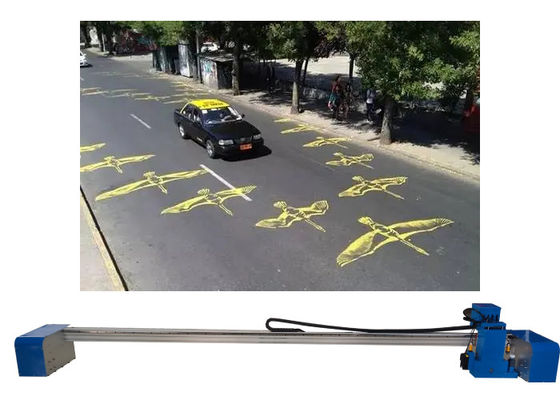
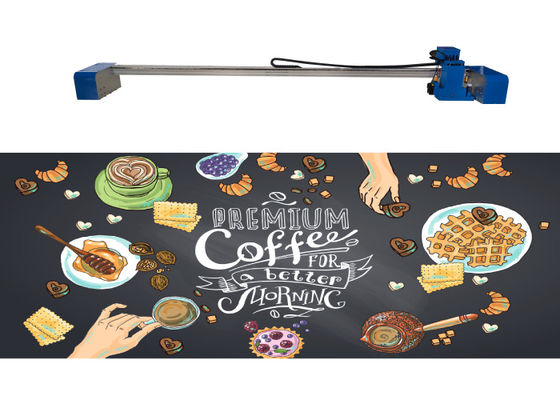
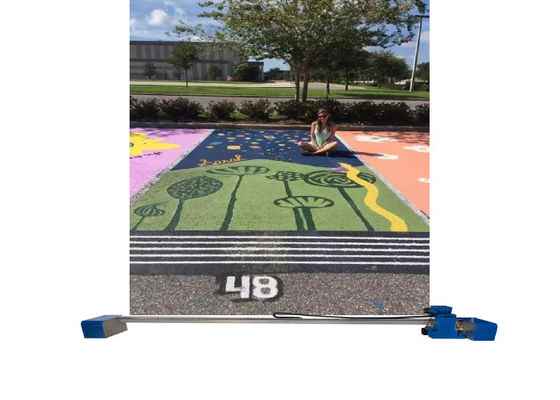
- The substrate list spans floor tile, ground decoration, garage floor, glass, wood board, ceramic tile and metal. That range is wide enough that one ink and primer combination cannot be assumed to hold across it: surface energy differs between glazed tile and bare metal, so adhesion has to be qualified per substrate rather than once for the set.
A flatbed described as unlimited
Resolving a width claim that contradicts the machine class
Flatbed printing means the work lies flat on a table and the head passes over it. That table is finite, so the machine's real width is finite too, and the buyer needs to know which of several possible meanings the word unlimited is standing in for before a floor plan can be drawn.
| Configuration item | Record basis for this unit | Buyer confirmation point |
|---|
| Machine class | Multifunction flatbed, with the substrate supported on a bed rather than against a wall | Treat the bed dimension, not the width claim, as the number to plan around. |
|---|
| Unlimited Width | Three readings are possible: a bed built from extension modules, a pass-through arrangement, or marketing for output joined from sections | Ask the quotation to choose one and to state the bed size that goes with it. |
|---|
| Bed dimensions | Not published in the specification fields | Require length, width, maximum substrate thickness and load per square metre. |
|---|
| Model number | The listing records no model number | Identify the unit by brand, platform reference and configuration schedule. |
|---|
| Conformity | ROHs for ink recorded in the fields, while the descriptive copy elsewhere on the listing refers to CE-certified construction | Ask which statement is authoritative for the shipped unit and get the answer in writing. |
|---|
A contradiction inside one listing is not always a mistake; it can be boilerplate carried over from a related product. Either way it is the buyer's question to ask and the supplier's to answer on paper.
Bed flatness, cure dose and the cost of a joined bed
What an extended flatbed does to print quality
On a flatbed the head height is referenced to the bed, so anything that bends the table or the substrate becomes a visible defect. Extending the table in width introduces a joint, and the joint is where the flatness argument is either won or lost.
| Area | What this machine imposes | Verification action |
|---|
| Flatness across a joint | A bed assembled from sections carries a step or a slope at the seam, and a head set for one section will be at the wrong distance over the other. | Ask for a flatness figure over the full bed and print a band that crosses the seam. |
|---|
| Substrate thickness tolerance | Because height is referenced to the table, a sheet that is thicker at one corner changes the drop distance along its length without any adjustment being made. | Measure thickness at several points on the first sheet and set height from those readings. |
|---|
| Cure on thick rigid stock | A thick sheet takes lamp heat unevenly and can bow, which moves the surface away from the set height as the job progresses rather than before it starts. | Record cure settings and check the sheet for bow after the first pass. |
|---|
| Thin sheet under the lamp | Thin aluminium or PVC can distort within a single pass, and a warped sheet will not sit flat on a vacuum bed once it has taken heat. | State the substrate range in writing and test the thinnest material in the actual job. |
|---|
| Two ink families, two machines | The descriptive text offers water-based or UV ink depending on configuration, but one needs an absorbent surface and the other needs a lamp, so the two are different machines in practice. | Confirm which system is fitted to the quoted unit rather than which is offered in general. |
|---|
| What an ink declaration covers | A RoHS statement about ink is a restricted-substance declaration. It is not a food-contact assessment and not a low-migration statement, and treating it as either is a common procurement error. | State the intended end use and ask which further ink documents that use requires. |
|---|
A restricted-substance statement, a flatness measurement and a colour check are three different documents and are often spoken of as one. Conformity for the destination is settled separately from any print-quality method, and neither implies the other.
Independent manufacturer overview
The storefront describes WallNova as a digital wall printing technology manufacturer. The storefront also advertises OEM and ODM work on this class of machine, with minimum quantities described as varying by customisation level. All of that describes the supplier entity rather than a delivered unit, which is why the quotation, not the profile, is the document that counts here.
- Brand
- WallNova
- Positioning
- Digital Wall Printing Technology
- Product origin
- Beijing, China
- Contact address
- Longhua District, Shenzhen, China
- Service hours
- 8:30-17:30 (China time)
- Business scope
- Direct-to-wall printing systems
Conformity scope and qualification
| Qualification aspect | Scope statement |
|---|
| Machine conformity | Assessed for the shipped model and the regulatory requirements of the destination market. |
|---|
| Ink conformity | Assessed separately from the machine, against the ink set supplied with the order. |
|---|
| Certificate applicability | Certification depends on the actual product model and target market. |
|---|
| Documentation control | Documents are issued against the delivered configuration schedule and the named contracting entity. |
|---|
The listing's descriptive copy and its specification fields do not agree about machine-level CE. Only a document naming the shipped unit and its market resolves that, and a supplier profile cannot.
Questions the unlimited claim creates
What to ask before accepting a width without a bed size
One word in the title does most of the work here, and it is the word that conflicts with the machine class named beside it.
Can a flatbed printer really be unlimited in width?
Not in a single pass. A bed has edges. The claim most likely refers to a table assembled from modules, a pass-through arrangement, or output joined from sections, and each answer implies a different floor plan and a different way of loading material. The quotation should say which one is being sold.
What bed size should I plan the room around?
The listing does not publish one, so the figure has to come from the quotation together with maximum substrate thickness and permissible load. Those three numbers decide whether a given panel can be handled at all, long before print quality becomes the subject.
Is this machine CE marked?
The specification fields record only ROHs for ink, while the descriptive copy on the same page refers to CE-certified construction. The two statements do not match. Certification depends on the actual product model and target market. For a specific unit and destination the answer belongs in the quotation rather than in an inference.
Should I specify UV ink or water-based ink?
For rigid, non-porous work the UV route is the one that can succeed, because there is no absorption path and the ink has to be cured where it lands. The listing mentions both families, so the order should name the system fitted rather than the range available.
What does multifunction cover on this machine?
The class name says multifunction but the fields do not enumerate a function. If the business plan depends on printing plus varnish, coating or a second ink set, that requirement should be tested against the configuration schedule before any deposit is paid, since a category label is not a feature list.
What does acceptance look like on a wide bed?
A print that runs the full width and crosses any joint, thickness measured on the actual sheet, cure settings recorded, and a flatness check at the seam. If the width claim survives that panel, it has acquired a meaning; if it does not, the buyer has found out cheaply.
Clearing the width contradiction before deposit
Checks that convert an ambiguous claim into a dimension
Nothing on this list is unusual for a flatbed purchase. What is unusual is how much of it has to be asked for, because the listing states almost none of it.
| Check | What this unit requires | Record to hold |
|---|
| Bed dimension | Length, width, thickness range and permissible load are stated in the quotation. | Quotation drawing |
|---|
| Width claim | The meaning of Unlimited Width is stated, with the mechanism named. | Supplier statement |
|---|
| Conformity conflict | The difference between the ink-only field and the CE wording in the descriptive copy is resolved in writing. | Declaration, quotation |
|---|
| Ink family | The fitted system is named and the substrate range matches it. | Specification sheet |
|---|
| Flatness record | Flatness measured over the bed and at any section joint. | Commissioning record |
|---|
| Cure record | Lamp settings and pass speed recorded for the first production material. | Commissioning record |
|---|
A claim that resists being turned into a dimension is usually answering a different question from the one the buyer asked.