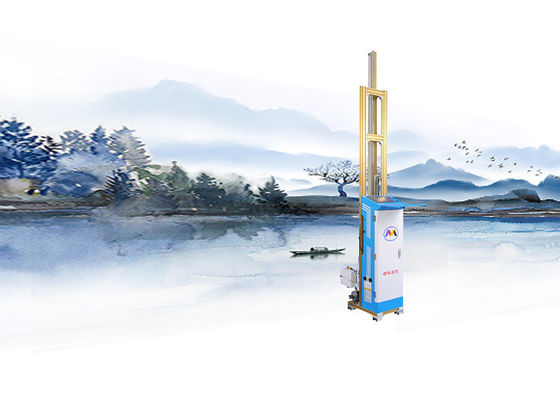
Direct from manufacturer
Free Width Multispeed Vertical Wall Printing Machine With Micro Piezoelectric Printhead
- Place of Origin
- Beijing, China
- Brand Name
- WallNova
- Certification
- CE for machine, RoHS for ink

Factory direct product
HD Vertical Wall Printing Machine With 1.8m-2.7m Printing Height. Model ZK-Q8. from Beijing, China.
Product specifications
Consolidated technical specifications
The distinctive item on this record is not a single height but a band: the designation states a working range from 1.8m to 2.7m. A range is a different claim from a maximum, and it raises questions that a single figure does not — how the band is adjusted, whether the whole band prints to the same quality, and what carries the load at the top of the range. The other name-level item, HD, is a quality word with no number attached, so it cannot be quoted against a job.
| Field | Recorded value |
|---|---|
| Product designation | HD Vertical Wall Printing Machine With 1.8m-2.7m Printing Height |
| Model Number | ZK-Q8 |
| Brand Name | WallNova |
| Place of Origin | Beijing, China |
| Product family | Direct To Wall Printer |
| Platform reference | 13581633 |
| Designation descriptors | 1.8m to 2.7m working band as a range rather than a maximum, HD as an unquantified quality claim, no resolution figure on the record |
| Conformity scope | CE is recorded for the machine and RoHS for the ink, which are two separate assessments of two separate items. Certification depends on the actual product model and target market. |
A range usually reflects an adjustable assembly, and an adjustable assembly has a joint. Where the joint sits, how it is re-plumbed after adjustment and whether the tooling for it ships with the machine are the three questions that turn the band into a usable specification.
Reference model series and configuration boundaries
A machine described as 2.7m can usually print anything shorter. A machine described as 1.8m to 2.7m is asserting something narrower: that both ends of that band are supported, and that the buyer will work somewhere inside it. The practical consequences are set out below, together with the two descriptors that carry no usable value on their own.
| Configuration item | Record basis for this unit | Buyer confirmation point |
|---|---|---|
| Working band | 1.8m to 2.7m stated as a range, with no statement of how the band is changed | Ask whether the band is set by mast sections, a sliding carriage track or a repositioned head block, and what tooling that requires. |
| HD claim | A quality word with no resolution, dot size or print-mode reference attached | Request the resolution at each print mode, since HD cannot be compared between suppliers in its adjective form. |
| Model identity | ZK-Q8, a number carried by more than one listing in this catalogue | Quote model, platform reference and configuration schedule together when specifying or comparing. |
| Rail and travel | Not described; the working width is open | Fix rail length, joint spacing and who supplies extensions before the wall is measured. |
| Base and ballast | Not described, though the top of the band implies a tall mast | Confirm the base footprint and whether ballast or floor fixing is required at full height. |
The band is useful only if the buyer's walls fall inside it. Measure the shortest wall the machine will ever face as well as the tallest, because a machine set up for 2.7m may not be comfortable printing a 1.4m panel at the bottom of the band.
Engineering practice across a 1.8m to 2.7m band
A tall mast is a lever, and the top of this band is close to the ceiling height of an ordinary commercial storey. The six items below are the ones that behave differently at 2.7m than at 1.8m, and they are the ones to write into a commissioning record that will still be useful a year later.
| Area | What this machine imposes | Verification action |
|---|---|---|
| Adjustment and re-plumb | Changing the band means changing the mast or track geometry, and any joint that is loosened has to be re-plumbed; a band adjustment done without that step shows as drift at the top only. | Re-plumb with a digital level after every band change and record both readings, at the joint and at the top. |
| Lever effect at full height | At 2.7m the carriage hangs on a mast whose stiffness is being tested by its own height, so vibration and backlash appear as horizontal banding that is absent lower down. | Print the same test file at 1.8m and at the top of the band, and compare the two rather than accepting the short print as representative. |
| Outdoor wind load | A tall vertical panel outdoors acts as a sail, and a gust that moves the mast closes or opens the head-to-wall gap mid-pass. | Work outdoors inside an agreed wind limit, brace the mast, and stop the job when the wall face is being buffeted. |
| Floor loading and ballast | The taller the set-up, the more the base has to resist tipping, and a screed or a raised access floor may not take a point load without spreading. | Check the floor build-up where the base will stand, and use a load-spreading plate rather than relying on the machine's own feet. |
| Ceiling and soffit interference | A 2.7m working height leaves little room for a mast to be assembled and tilted under a suspended ceiling, a duct or a lighting track. | Measure floor to the lowest obstruction, and plan the assembly sequence so the mast is raised in place rather than tilted up. |
| Registration across the band | A design that runs the full height crosses every zone of the mast, so an error that is invisible in one panel can appear as a visible step where two panels meet. | Use one overlap zone for tall work and check the joint at the top third of the wall, not only at eye level. |
Adhesion and colour evaluation on exterior and interior finishes draw on ASTM and ISO method families. Which method applies is agreed for the actual substrate and destination market at quotation stage, and naming a method family is not a claim that this model holds a certificate.
Product description and image documentation
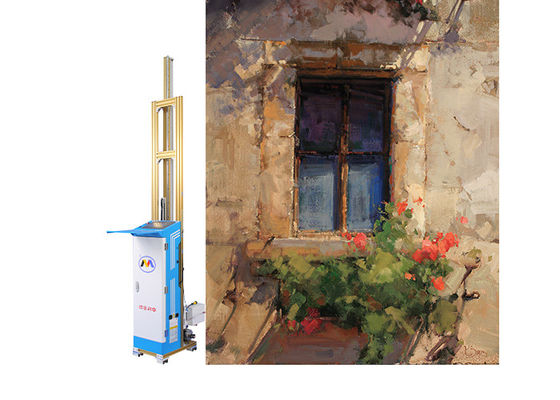
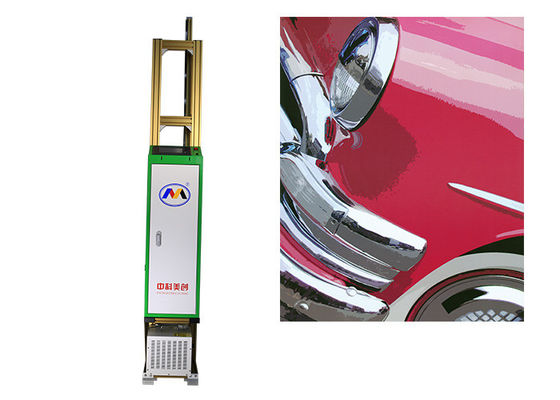
Four views are published under this reference and shown below at their intrinsic aspect ratios. Selecting a view opens the enlarged viewer, where Previous and Next or the arrow keys move through the set. The mast proportions in these views are the most useful thing to compare with a real wall, since the band claim is entirely about vertical reach.
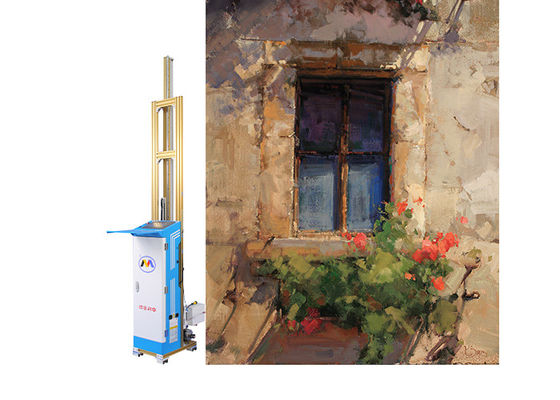

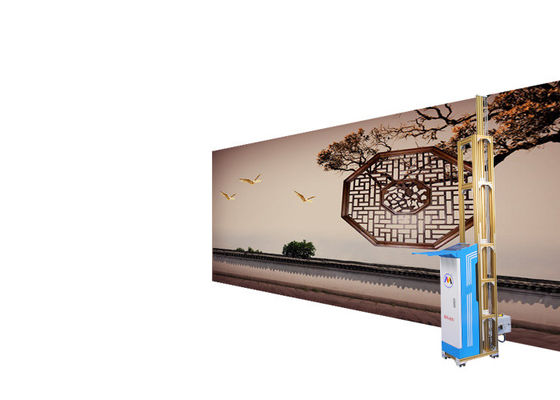
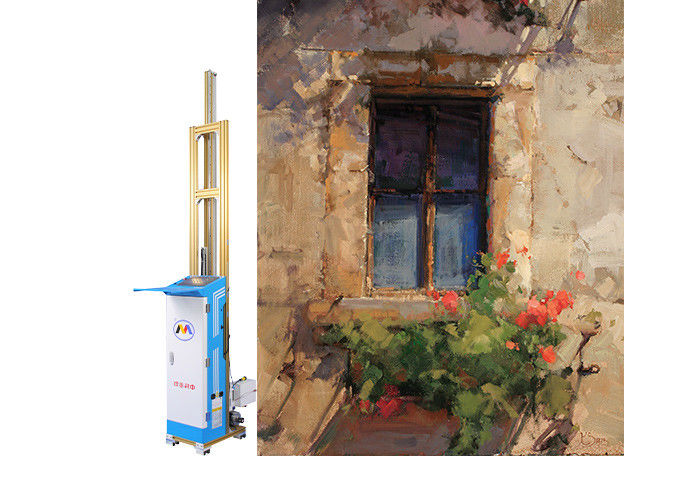
These four files are the full image set held for reference 13581633 and keep their original media-library names, so each view can be traced to the listing record it came from.
Independent manufacturer overview
WallNova is presented on this platform as a digital wall printing technology manufacturer. The identification data below describes the supplier entity, not the delivered configuration of this machine, whose working band is set at order stage and whose build is described by the configuration schedule.
| Qualification aspect | Scope statement |
|---|---|
| Machine conformity | Recorded as CE for the machine, assessed for the shipped model and the regulatory requirements of the destination market. |
| Ink conformity | Recorded separately as RoHS, assessed against the ink set supplied with the order rather than against the assembly. |
| Certificate applicability | Certification depends on the actual product model and target market. |
| Documentation control | Documents are issued against the delivered configuration schedule and the named contracting entity, so a band change at order stage should also be reflected in that schedule. |
Because the working band can be set at order stage, the schedule is the only document that ties a specific band to a specific machine. Keep the version issued at order and compare it with the one that arrives in the crate.
Questions this configuration actually raises
Every question below follows from the band and the HD claim on this record. Commercial matters such as payment terms and packing are handled in the quotation and are not repeated here.
Because the assembly is adjustable and both ends are being supported. That is a more honest claim than a single maximum, but it also means the buyer should ask how the adjustment is made and whether the whole band prints to the same quality. A maximum figure tells you where the machine stops; a band tells you where the manufacturer expects you to work.
Not on this record. No dot per inch figure, no dot size and no print-mode name appears anywhere in the listing, so HD is a quality word rather than a parameter. Ask for the resolution at each print mode and compare that table with the smallest text or the finest edge detail the actual job contains.
Probably, but the band is the manufacturer's stated working range and it should not be extended by assumption in either direction. If a substantial part of the workload is low walls — a garage, a shopfront fascia, a partition — ask specifically how the machine behaves below the stated band before accepting the specification.
Plumb at two heights, the base footprint and its ballast, the assembly envelope under whatever is overhead, and a test print at full height compared with the same file printed low. The comparison between the two prints is the only reliable evidence that the top of the band behaves like the bottom.
It can be, subject to the same constraints as any tall mast: wind load on the panel, sun on the carriage and the ink, and the substrate's own weather performance. A 2.7m panel outdoors presents a large sail area, so an agreed wind limit and a braced mast are part of the working method rather than optional precautions.
By the platform reference together with the plate and the configuration schedule. The model number describes a chassis family that covers more than one build, and a quotation that names only the model cannot be compared with another that names only the model. Quote all three identifiers whenever a unit is specified.
A test print at the bottom, the middle and the top of the band, using one file, with plumb readings taken at each band setting and a note of the ballast or fixing arrangement used. Without a print from each zone of the band, the acceptance only covers the height that happened to be convenient on the day.
Verification before order and before dispatch
These lines follow from the working band and the height-dependent behaviour of a tall mast. They supplement rather than replace the commercial, customs and payment checks that apply to any import.
| Check | What this unit requires | Record to hold |
|---|---|---|
| Band definition | The two ends of the band and the adjustment method are stated, including the tooling required. | Technical annex to the quotation |
| Resolution by mode | Each print mode carries its own resolution figure rather than the HD adjective. | Technical annex to the quotation |
| Overhead clearance | Floor to lowest obstruction has been measured against the assembly envelope at full height. | Site survey |
| Base and floor | Footprint and load spreading are agreed for the floor build-up where the machine will stand. | Site survey, commissioning record |
| Plumb at both ends | Readings exist at the bottom and the top of the band, not only at working height. | Commissioning record |
| Full-height print | One file printed at three band settings, retained as the comparison baseline. | Acceptance panel |
| Conformity files | Machine and ink documents name the shipped model and the destination market. | Certificate set for the delivery |
Any line without a document behind it is an open question for the quotation. On a tall machine those questions get much harder to answer once the mast is standing on site.
Direct from manufacturer
Direct from manufacturer

Direct from manufacturer