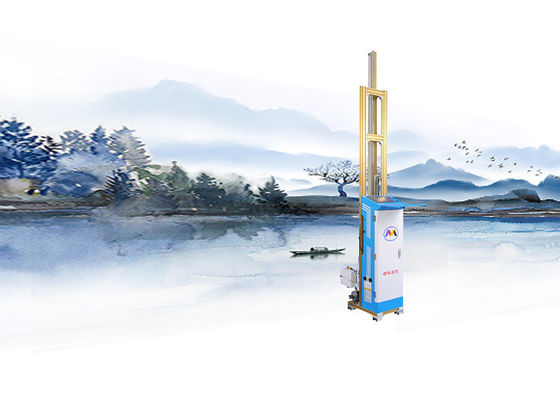
Direct from manufacturer
Free Width Multispeed Vertical Wall Printing Machine With Micro Piezoelectric Printhead
- Place of Origin
- Beijing, China
- Brand Name
- WallNova
- Certification
- CE for machine, RoHS for ink

Factory direct product
WallNova 220v Vertical 3d Wall Printing Machine , Laser Positioning Wall Printer. Model ZK-Q8. from Beijing, China.
Product specifications
Consolidated technical specifications
Four field values plus four name-level strings make up this record: a supply voltage written in the lowercase style of the listing, a positioning method, a rendering effect, and an entity string that differs from the brand field below it. The last of those is the one buyers skip, and it is the one that becomes expensive at the customs desk or at the warranty desk. The rest of the name is unusually specific for this family, so the page works from the positioning claim and the supply figure rather than around them.
| Field | Recorded value |
|---|---|
| Product designation | Zkmc 220v Vertical 3D Wall Printing Machine , Laser Positioning Wall Printer |
| Model Number | ZK-Q8 |
| Brand Name | WallNova |
| Place of Origin | Beijing, China |
| Product family | Direct To Wall Printer |
| Platform reference | 13581594 |
| Designation descriptors | 220v supply figure, laser positioning as the alignment method, 3D effect as a rendering outcome, Zkmc as an entity string distinct from the recorded brand |
| Conformity scope | CE is recorded for the machine and RoHS for the ink, which are two separate assessments of two separate items. Certification depends on the actual product model and target market. |
Two entity strings on one record is not a contradiction, but it is a question: one may be a trading name, the other a manufacturing entity, and only one of them will appear on the invoice and on the conformity documents. Ask which entity issues the paperwork before the credit is opened, because changing it later is not a clerical matter.
Reference model series and configuration boundaries
A positioning aid is the most misunderstood item on a wall printer, because it looks as though it removes the need for site preparation. It does not. The table sorts the descriptors on this record into those that constrain the installation and those that only describe an outcome the buyer has to verify.
| Configuration item | Record basis for this unit | Buyer confirmation point |
|---|---|---|
| Positioning method | Laser positioning is named, with no statement of whether it is a cross-line projector, a distance laser or an edge reference | Ask what the laser defines, then check that the answer covers height datum, horizontal datum and panel-to-panel offset. |
| Supply figure | 220v is stated in the name; frequency, phase and tolerance are not | Obtain the full supply line, including frequency, before the site circuit is installed rather than after. |
| 3D effect basis | A rendering descriptor with no relief hardware described anywhere on the record | Agree the artwork and the viewing distance as acceptance criteria, since perceived depth is produced by the file and the geometry. |
| Entity naming | Zkmc in the name, WallNova in the brand field, both attached to the same reference | Confirm which entity contracts, invoices and issues the conformity documents for this build. |
| Rail and travel | Not described, so working width is open | Fix rail length and joint arrangement in the order, including who supplies extension sections. |
Positioning hardware shortens setup; it does not make a wall flat, a column plumb or a floor level. Buyers who expect the laser to absorb those errors usually discover the difference on the second panel, when the offset appears between the first and the second print.
Engineering practice for a laser-aligned 220v unit
Two claims on this record drive most of the installation risk: the machine is aligned by laser, and it runs on 220v. The first is often trusted more than it deserves and the second is often read as a complete electrical specification, when in fact it is one figure out of four that a site needs.
| Area | What this machine imposes | Verification action |
|---|---|---|
| Laser datum against mast plumb | A laser sets a reference line in space, but the carriage still travels on a mast, and a mast that leans produces drift that no projection line can correct. | Plumb the column with a digital level first, then use the laser to place the image; record both checks separately. |
| Laser visibility on site | A bright interior, a glazed shopfront or direct sun on an exterior wall can drown a projection line, and an operator who cannot see the line will set the datum by eye. | Test the line on the actual wall at the actual time of day before production, and provide local shading where the line washes out. |
| Single-phase supply quality | A 220v figure says nothing about frequency, tolerance or neutral and earth arrangement, and a site with a floating neutral will produce faults that look like controller failures. | Obtain frequency and tolerance from the supplier and measure the site supply, including earth continuity, before commissioning. |
| Voltage in other markets | Equipment specified at 220v is not automatically suitable for a 110v market, and a step-up transformer introduces its own earthing question. | Confirm the supply range in writing for the destination, and if a transformer is used, have its earth arrangement approved by the site electrician. |
| Re-datum between panels | Each new panel position needs its own datum, and a laser that is moved with the machine carries any setup error into every subsequent panel. | Fix a permanent reference on the wall for multi-panel work and re-check the offset at the joint after each move. |
| Laser safety during setup | Alignment work happens with the operator close to the beam and often at height, and the class of the device is not stated on this record. | Ask for the laser class and keep the setup routine to trained staff with the beam kept below eye level. |
Where a positioning claim and an electrical figure are the only technical content on a record, the safe reading is that both describe capability while the installation still depends on the site. Adhesion and colour checks draw on ASTM and ISO method families, agreed for the substrate and destination market at quotation stage.
Product description and image documentation
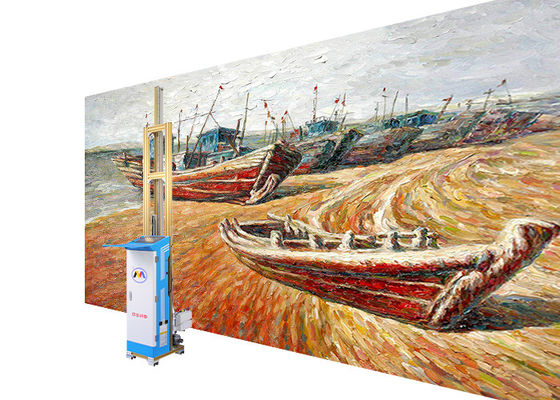
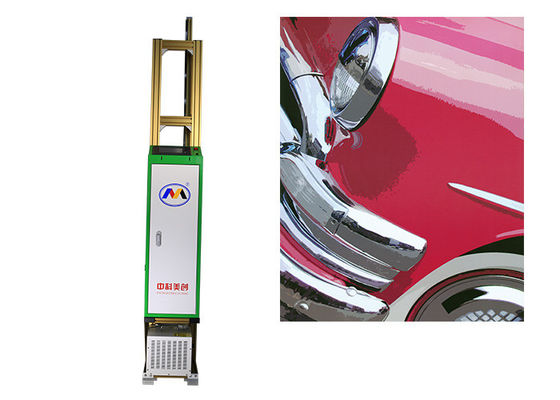
Four views are held under this reference and appear below at their intrinsic aspect ratios. Selecting a view opens the enlarged viewer, where Previous and Next or the arrow keys advance through the set. The views are worth reading for the mast and base arrangement in particular, since that is what the plumb check acts on before the laser datum is set.
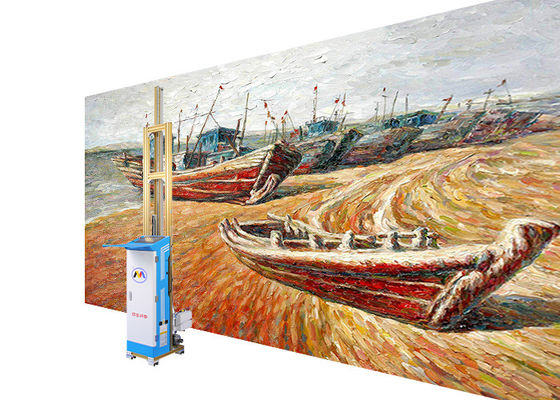

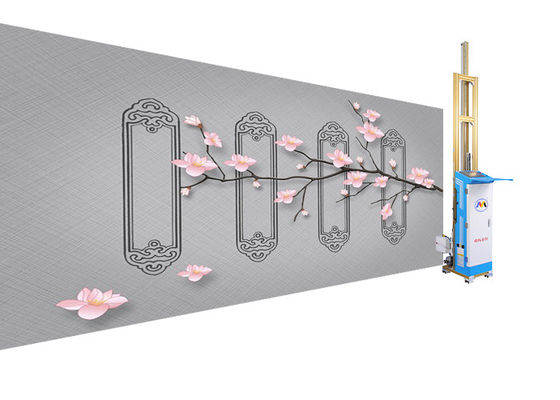
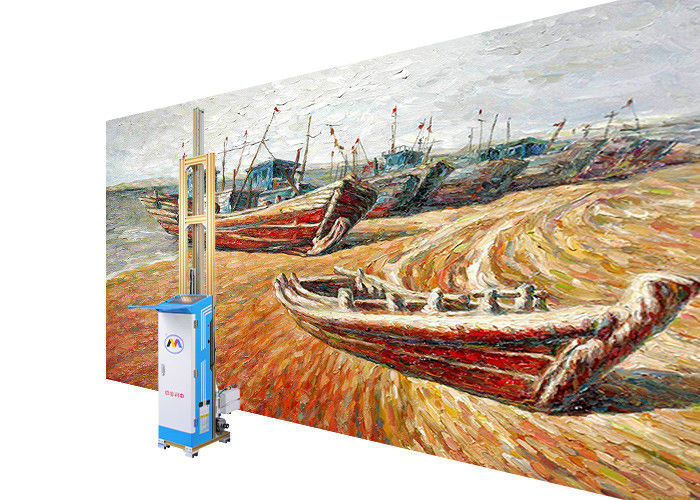
These four files form the whole image set for reference 13581594 and keep their original media-library names, so any view can be traced back to the record it was published from.
Independent manufacturer overview
The storefront presents WallNova as a digital wall printing technology manufacturer. The data below identifies the supplying entity, and it is worth reading alongside the name string on this listing, because the product name carries a different entity string while the brand field carries this one.
| Qualification aspect | Scope statement |
|---|---|
| Machine conformity | Recorded as CE for the machine, assessed for the shipped model and the regulatory requirements of the destination market. |
| Ink conformity | Recorded separately as RoHS, assessed against the ink set supplied with the order rather than against the assembly. |
| Certificate applicability | Certification depends on the actual product model and target market. |
| Documentation control | Documents are issued against the delivered configuration schedule and the named contracting entity, which is why the entity question above matters. |
When a name carries one entity and the brand field another, the conformity file is only useful if it names the same entity that ships the machine. Put that question on paper before payment, not after a fault.
Questions this configuration actually raises
These questions follow from the positioning claim, the supply figure and the entity string on this record. Payment terms and packing are answered in the quotation and are not repeated on this page.
No. The laser establishes where the image sits in space; the mast establishes whether the carriage travels straight. A leaning column will still produce colour fringe and pass drift even when the projection line is perfectly placed, so levelling and plumbing come first and the laser comes after.
Not quite. A complete supply specification needs voltage, frequency, phase, current and the earth arrangement, and this record gives only the first. Ask for the rest before an electrician is booked, because a 50 Hz and a 60 Hz site are not interchangeable for motor-driven equipment and a floating neutral is a fault waiting to happen.
Only with an appropriate step-up transformer, and the choice of transformer is an electrical decision rather than a purchasing one. The earthing arrangement of the combined installation has to be approved locally, and the conformity documents should still name the destination market before the unit is shipped.
The name string carries one entity and the brand field carries another, with both attached to the same reference. That may be a trading name, a factory name or a product line, and the listing does not say which. The practical question is which entity appears on the invoice, the packing list and the conformity documents, and the answer should be in writing before payment.
By using a fixed reference that survives the machine being moved, and by re-checking the joint after every repositioning. The laser helps set each new panel, but the offset accumulates at the joint, which is the only place a client will look. Print a narrow overlap on the first panel of each pair and trim it rather than relying on the datum alone.
No relief hardware is described on this record, so the depth is printed. It comes from the artwork, from the way layers of ink sit on the wall and from the distance at which the wall is viewed. Signing off the artwork file and the viewing distance at the same time as the test panel is what makes the result arguable rather than subjective.
The plumb reading at two heights, the laser datum position relative to a permanent wall mark, the supply measurement at the mast base, and a test panel at the highest and lowest band. Those four records answer almost every question that arises in the first year of ownership.
Verification before order and before dispatch
The lines below follow from the two technical claims and the entity question on this record. They supplement rather than replace the commercial, customs and payment checks that apply to any import.
| Check | What this unit requires | Record to hold |
|---|---|---|
| Entity resolution | One entity for contract, invoice and conformity documents is named in writing. | Signed order, proforma invoice |
| Positioning definition | The laser type and the references it establishes are stated, including the laser class. | Technical annex to the quotation |
| Full supply line | Voltage, frequency, phase, current and earth arrangement are all confirmed. | Electrical survey, quotation |
| Plumb baseline | The column has been plumbed at two heights and the readings recorded before printing. | Commissioning record |
| Datum mark | A permanent wall reference exists for re-datuming on multi-panel work. | Site drawing, commissioning record |
| Artwork control | The file and viewing distance used for acceptance are named and retained by both parties. | Handover documents |
| Conformity files | Machine and ink documents name the shipped model, the entity and the destination market. | Certificate set for the delivery |
If any line has no document behind it, it is an open point for the quotation rather than a detail to resolve when the machine is already on site and the crew is being paid by the day.
Direct from manufacturer
Direct from manufacturer

Direct from manufacturer